
Succulent Pests and Diseases: Identify and Treat Them
White fuzz, webbing, black spots or mold? Most succulent pests and diseases are easy to beat once you know what you’re looking at. Identify the culprit below, then follow the exact treatment — starting with the most common one, mealybugs.
Quick ID: What’s Attacking Your Succulent?
Match what you see to the likely culprit, then jump to its fix:
| What you see | Likely culprit | Fix |
|---|---|---|
| White cottony fuzz in crevices or new growth | Mealybugs | Isolate + 70% alcohol |
| Fine webbing, tiny moving specks | Spider mites | Rinse + insecticidal soap / neem |
| Small hard brown bumps on stems/leaves | Scale | Scrape + alcohol / soap |
| Tiny flies hovering around the soil | Fungus gnats | Let soil dry — usually overwatering |
| Even white powdery coating on leaves | Powdery mildew | Improve airflow + fungicide |
| Black or brown mushy stem or roots | Root / stem rot | Overwatering — see rescue |
Mealybugs: The Most Common Succulent Pest
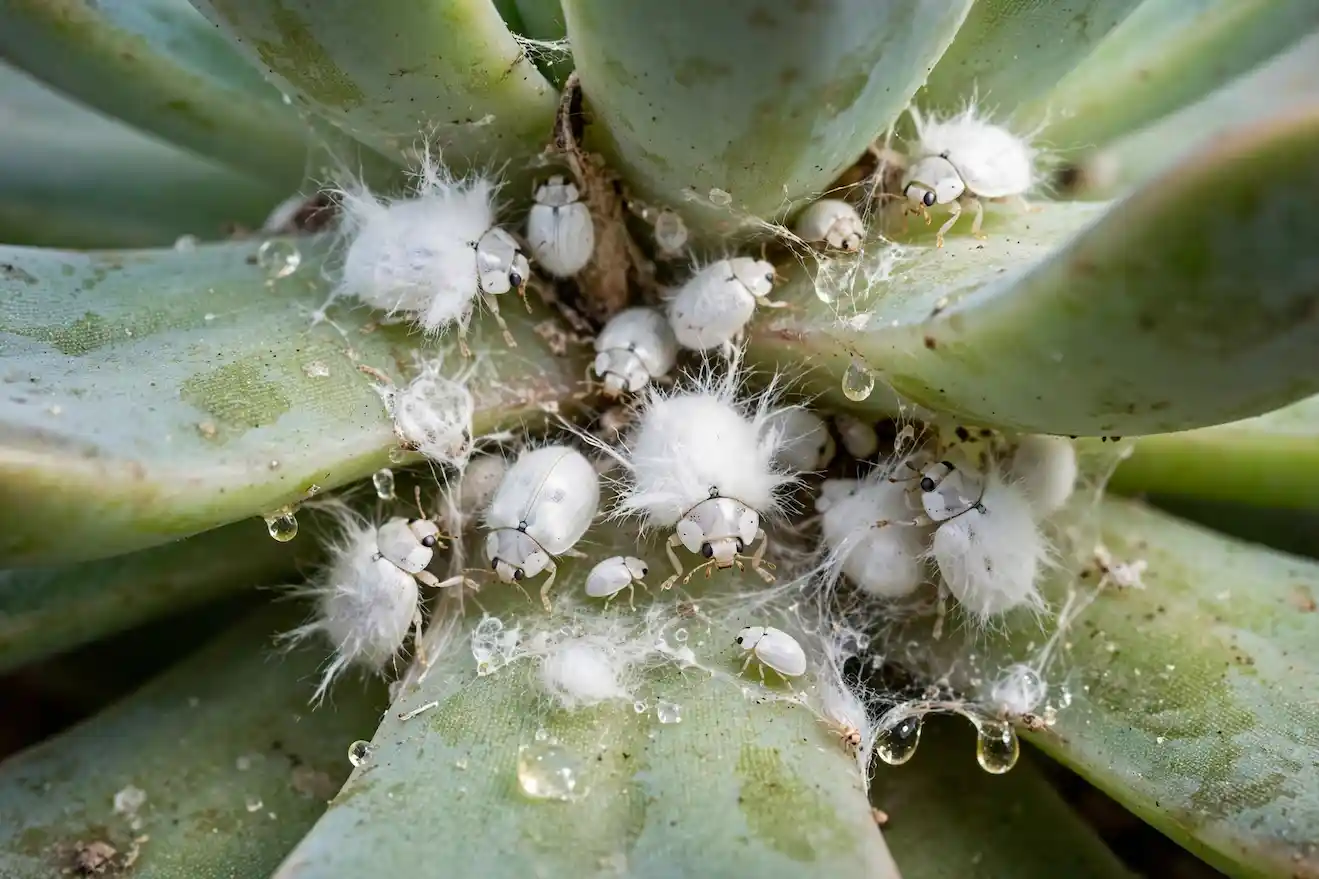
How to spot them
Mealybugs look like small blobs of white, cotton-like fuzz, usually tucked where the leaves meet the stem and around new growth. Look closely and you’ll see them slowly moving in masses. Other giveaways: sticky honeydew, ants marching on the plant, or sooty black mold. Don’t confuse them with farina — the natural powdery coating some succulents have — which is even and doesn’t move.
What causes them
Mealybugs thrive in warm, humid conditions and are drawn to soft new growth. Overwatering and over-fertilizing make plants especially attractive, which is why they’re most common on indoor succulents.
How to Get Rid of Mealybugs on Succulents
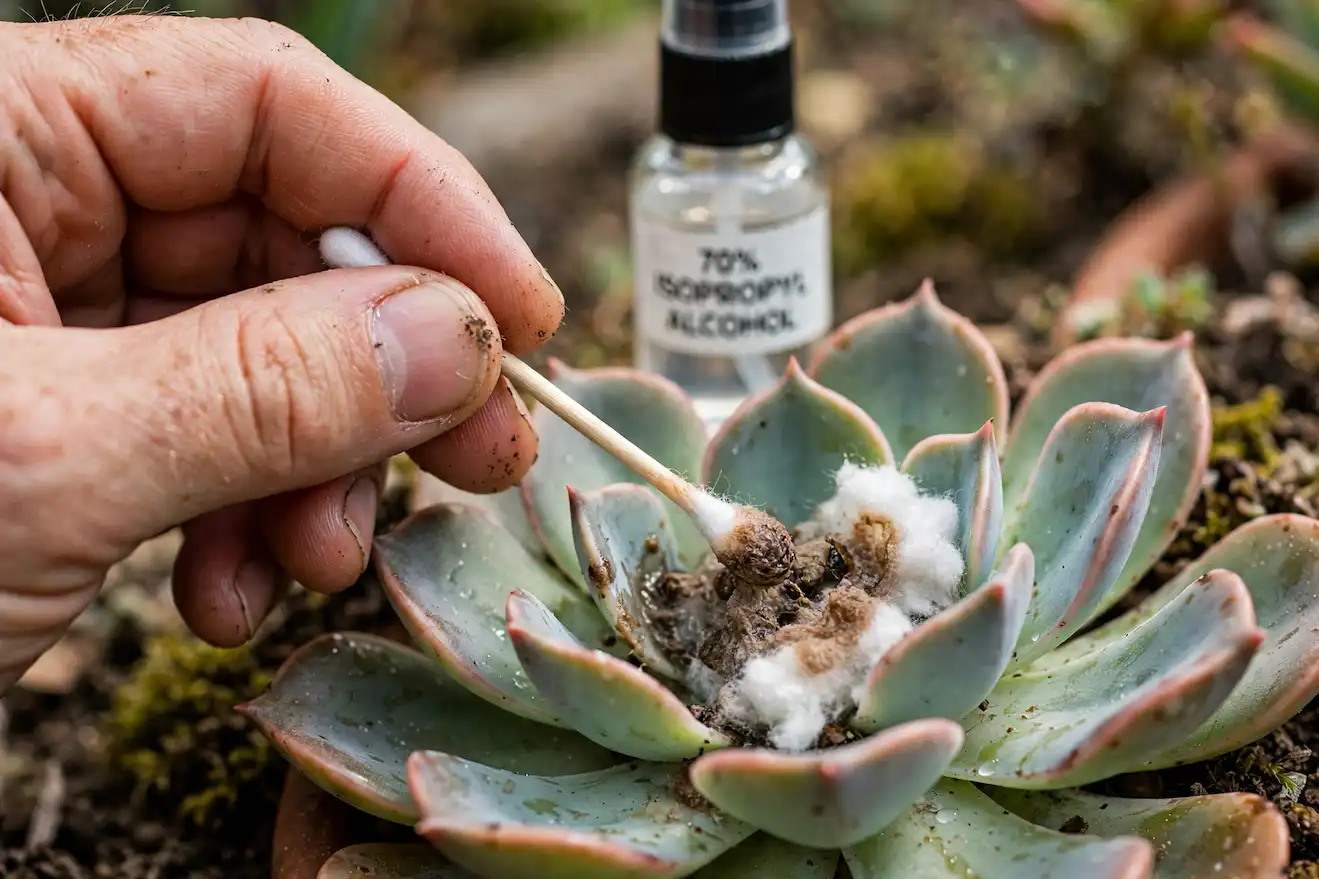
- Isolate the plant. Move the infested succulent away from your others immediately — mealybugs spread fast.
- Spray with 70% isopropyl alcohol. Saturate the whole plant, especially the crevices and leaf-stem joints. The cottony masses disintegrate and the bugs turn reddish. Alcohol is safe on succulents and evaporates in minutes; for a few stray bugs, dab them with an alcohol-dipped cotton swab.
- Rinse and repeat. Once the alcohol dries, wash the plant with a strong stream of water to remove the dead bugs. Alternatives: water with a little dish soap, insecticidal soap, or well-diluted neem oil (undiluted neem can burn leaves).
- Treat the soil. Spray the soil surface too — eggs and nymphs hide there. If the infestation is bad, repot in fresh, well-draining mix and discard the old soil.
- Keep it out of direct sun. For about 24 hours after treating, keep the plant out of direct sun; wet leaves plus alcohol or soap can scorch in strong light.
- Recheck weekly. Eggs hatch within a week or two, so inspect and re-treat every few days to a week until you’ve gone two weeks with no new bugs.
Don’t forget root mealybugs
If a plant keeps getting reinfested with nothing visible above the soil, check the roots — root mealybugs live in the soil. Rinse the roots, repot in fresh mix, and use a diluted neem oil soil drench.
Other Common Succulent Pests
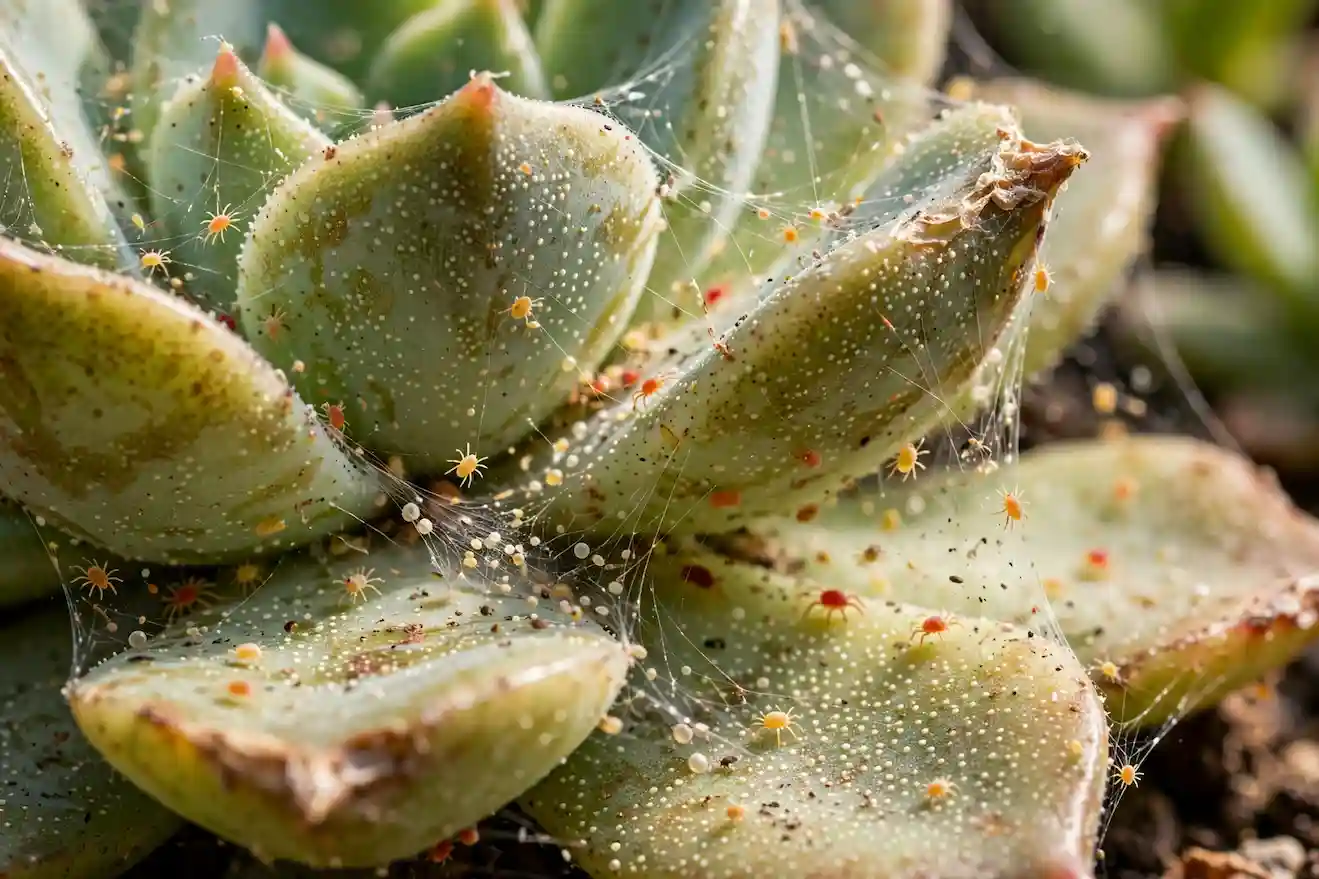
- Spider mites: fine webbing and tiny moving specks, often after hot, dry spells. Rinse the plant and treat with insecticidal soap or neem oil.
- Scale: small, hard brown bumps stuck to stems and leaves. Scrape them off, treat with alcohol or insecticidal soap, and sterilize whatever you scraped with.
- Aphids: small green, black or white insects on new growth and flower stalks. Rinse off and treat with soapy water or neem.
- Fungus gnats: tiny flies around the soil almost always mean the soil is staying too wet — let it dry fully; the real fix is correcting your watering.
Fungus gnats keep coming back? That’s an overwatering signal — see how to fix an overwatered succulent.
Succulent Diseases: Mold, Mildew and Rot
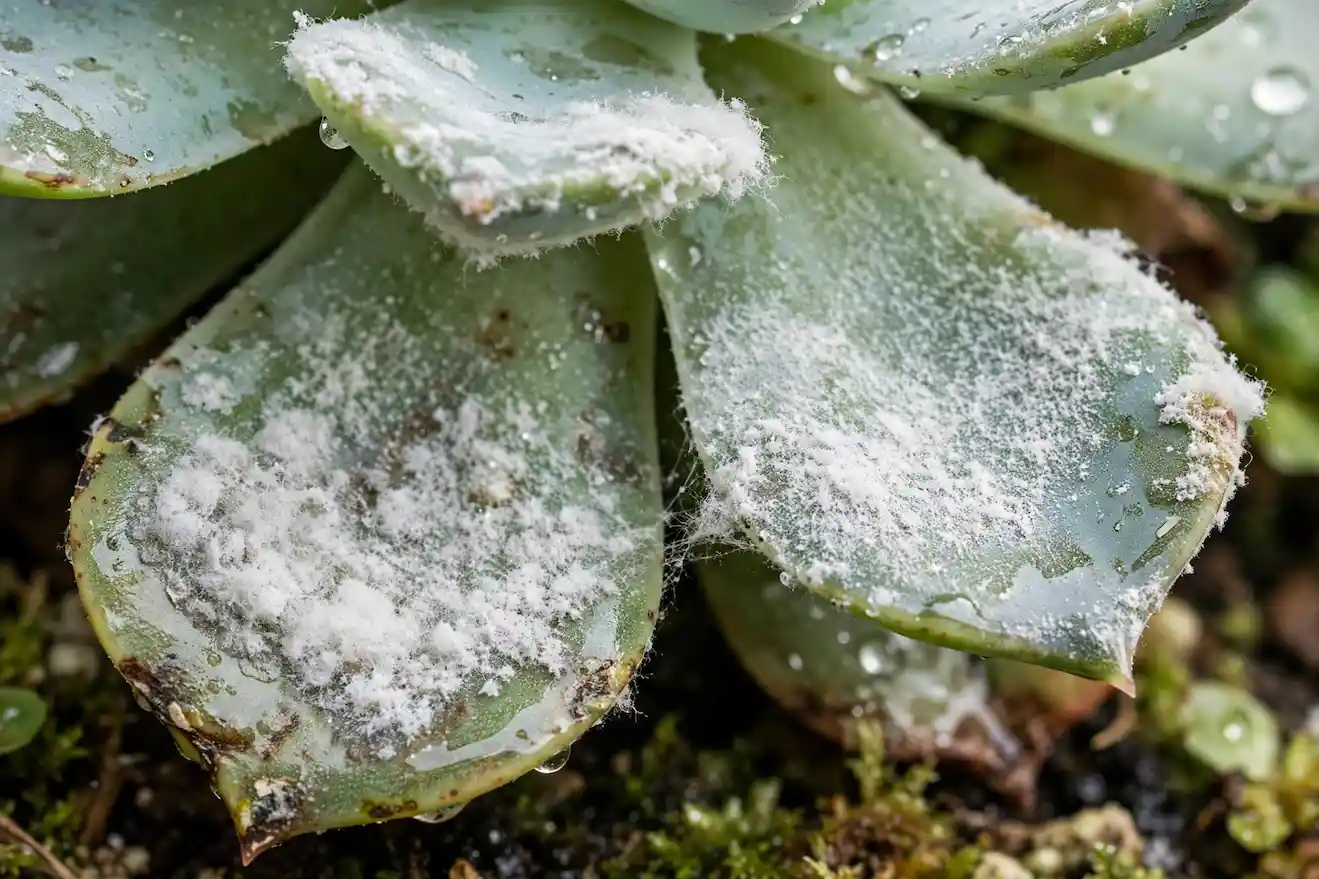
- Powdery mildew: a white, powdery coating on leaves in humid, still air. Improve airflow, remove affected leaves, and apply a fungicide or diluted neem.
- Black spot / leaf fungus: dark spots from fungal infection, often after water sits on the leaves. Remove affected leaves, water at the soil only, and improve ventilation.
- Root and stem rot: black, mushy stems or roots — this is overwatering, not a bug.
For rot, follow the overwatered succulent rescue. And remember: white spots aren’t always a pest — cottony and moving = mealybugs; an even coating that’s part of the leaf = harmless farina; a dry white crust on the soil = mineral or salt buildup.
How to Prevent Pests and Diseases
- Don’t overwater or over-fertilize — soft, stressed growth attracts pests
- Give bright light and good airflow
- Inspect plants regularly, especially new growth and crevices
- Quarantine any new plant for a couple of weeks before adding it to your collection
Healthy, correctly watered succulents resist pests best — start with the succulent watering guide.
Succulent Pests & Diseases FAQ
Most likely mealybugs — small insects that hide in white, cotton-like masses in the crevices. If it’s an even powder that doesn’t move, it may just be farina, a natural protective coating.
70% isopropyl alcohol sprayed directly on them works fast — the bugs turn red and the cottony webbing disintegrates within minutes, and the alcohol evaporates safely.
Usually overwatering or over-fertilizing, warm humid conditions, or eggs left in the soil. Treat the soil, repeat weekly to break the lifecycle, and check for root mealybugs.
Yes, if you act early and repeat treatment. Badly infested plants can still be saved by cutting and propagating a healthy, pest-free top.
Not if it’s farina — a natural, even, waxy coating. It’s a problem only if it’s cottony and moving (mealybugs) or powdery in patches (mildew).
Prevent the Next Infestation
Overwatered, stressed succulents are pest magnets. Correct watering is your best defense.
Part of the Succulent Care hub.