
How to Propagate Succulents in Water
Water propagation is the fastest and most watchable way to root succulents — you literally see the roots grow. It feels wrong (succulents hate wet feet!) yet it works. Here’s the method, plus the one catch nobody warns you about: water roots don’t transfer to soil the way you’d expect.
Why It Works When It "Shouldn't"
Every succulent guide preaches drainage and dry roots — so how does sitting a cutting near water not rot it instantly? The difference is what is wet. Root rot happens when established roots sit in soggy, pathogen-filled soil. In water propagation, only a callused cut end meets clean water while the leaves stay dry and airy. There’s no soil, no pathogens, and the plant is triggered to grow fresh roots toward the moisture. Different situation, different outcome.
Which Succulents Root Well in Water
| Works well | Skip it |
|---|---|
| Echeveria | Most desert cacti (rot easily) |
| Jade / Crassula | Fuzzy or powdery-leaved types |
| Aeonium | Very small/thin leaves that sink |
| Sempervivum | — |
| Epiphytic cacti (Christmas cactus, Rhipsalis) | — |
Stem cuttings water-root more reliably than single leaves. Not sure yours suits it? See the full method comparison.
What You'll Need
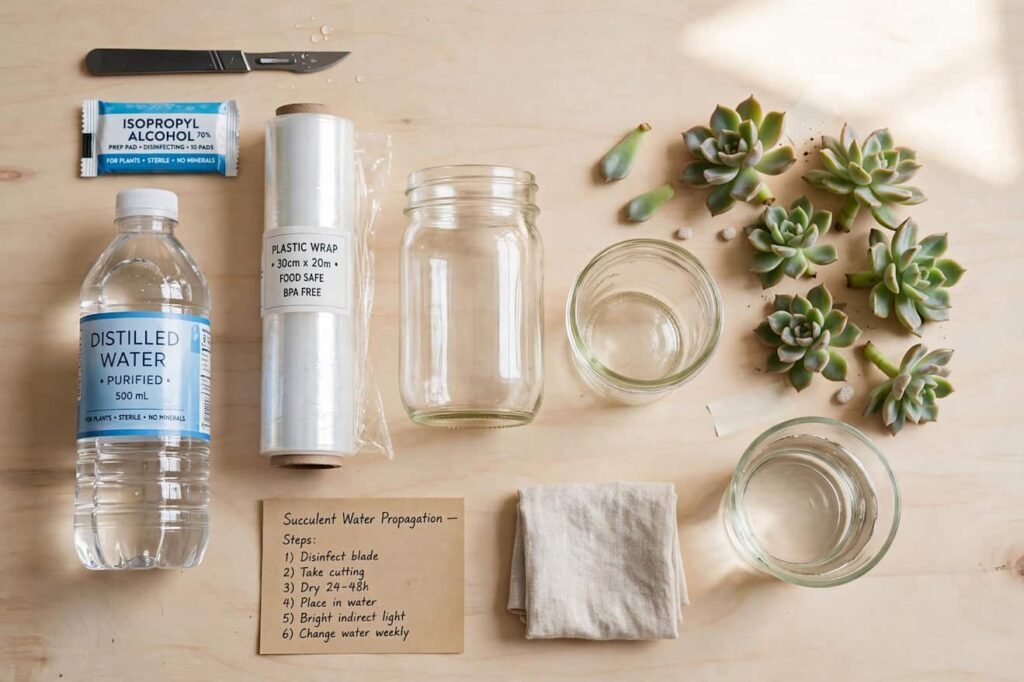
- A clean, sharp, disinfected blade
- A clear glass jar or cup (so you can watch the roots)
- Distilled water, rainwater, or tap water left to sit 48 hours
- A bright, indirect-light spot
- Optional: plastic wrap to suspend small cuttings above the water
Step-by-Step: Water Propagation
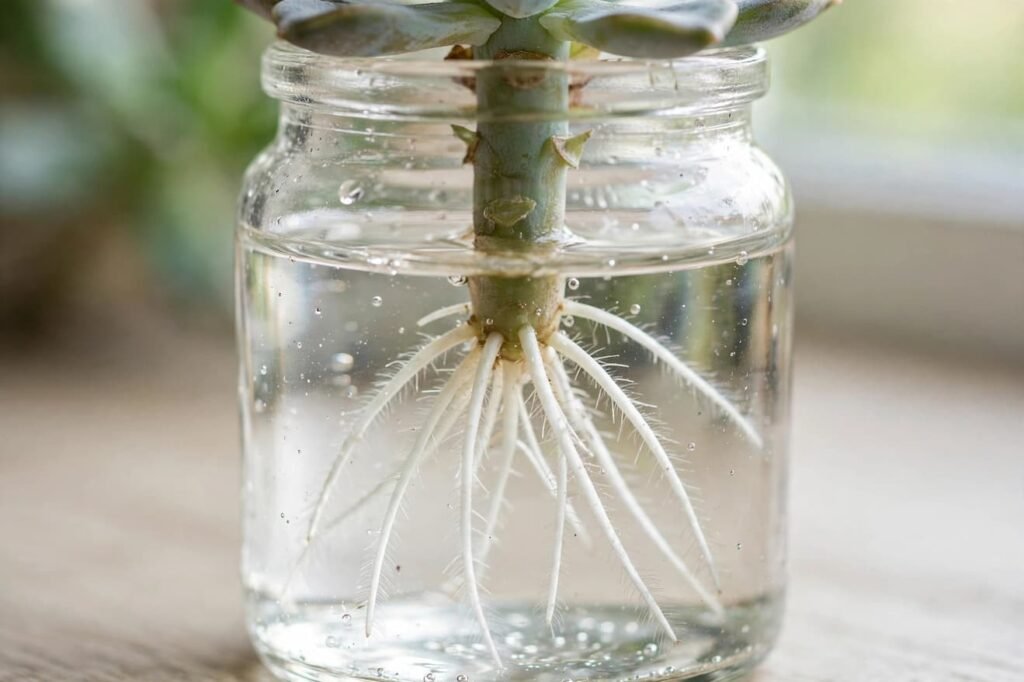
- Take a cutting. Cut a healthy stem just below a leaf node with a clean blade. Strip the lowest leaves.
- Callus first — yes, even for water. Let the cut end dry 2–5 days until sealed. Skipping this is the top cause of a mushy, rotted cutting.
- Set up the jar. Fill a clear glass with treated water. Position the cutting so the stem hovers just above, or barely touches, the surface (see which to choose below).
- Place in bright, indirect light. A window out of harsh direct sun. The glass lets light reach the forming roots.
- Refresh the water. Change it every few days, or whenever it turns cloudy, to keep it clean and oxygenated.
- Wait for roots. Roots usually appear in 2–6 weeks. Let them reach about an inch long.
- Transition to soil. Pot into gritty mix — carefully, because water roots need to adapt (see the catch below).
Hover Above or Touch the Water?
You’ll see both. Both work — pick based on your priority:
| Method | How | Best when |
|---|---|---|
| Hover above | Stem suspended just over the surface (use plastic wrap) | Lowest rot risk; the humidity draws roots down |
| Tip touching | Only the very end of the stem in the water | Simpler setup; slightly higher rot risk |
Never submerge the leaves — that’s the one way to guarantee rot.
Water Quality Matters More Than You Think
Young cuttings are sensitive to what’s in the water. This is why some props brown at the edges for no obvious reason.
| Water | Verdict |
|---|---|
| Distilled or rainwater | Best — no salts or chemicals |
| Tap, left to sit 48h | Fine — lets chlorine evaporate |
| Fresh tap water | Risky — chlorine and especially fluoride can brown leaf edges |
Fluoride travels through the cutting and settles at the leaf tips, browning them — and it spreads if you keep using fluoridated water.
The Catch: Water Roots Aren't Soil Roots
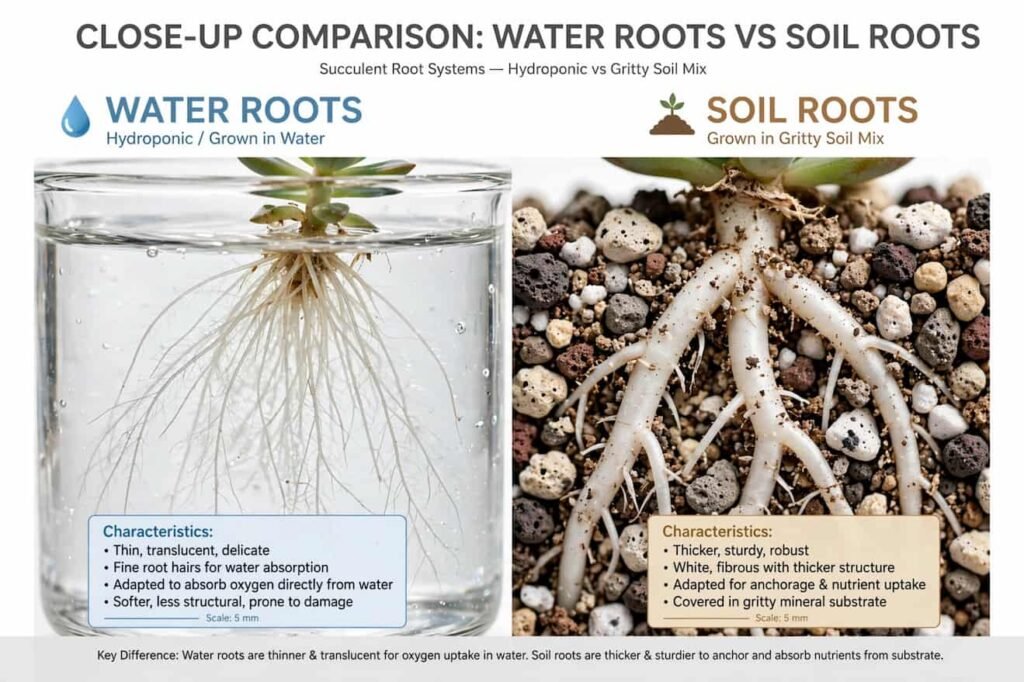
This is what most trendy tutorials skip. Roots grown in water are thinner and structured for absorbing from water, not soil. When you pot up, many of those water roots struggle or die back, and the plant grows a fresh set of soil roots — which takes time and can stress the plant. That’s why water-propagated succulents often stall right after transplanting.
How to transition without losing it
- Move to soil when water roots are about an inch long — not longer
- Pot into dry, gritty mix and wait a few days before the first light watering
- Expect a pause while it grows soil roots; keep it in bright, indirect light
- Water sparingly at first so the new soil roots reach down
Because of this, soil propagation makes sturdier long-term plants. Water shines for speed, aesthetics, and watching roots form.
How Long It Takes
| Stage | When | What you'll see |
|---|---|---|
| Callus | Days 2–5 | Sealed, dry cut end |
| First water roots | Weeks 1–3 | Fine roots reaching toward the water — often faster than soil |
| Ready to pot | Weeks 3–6 | Roots about an inch long |
| Soil roots establish | 2–4 weeks after potting | A pause, then new growth resumes |
Water vs. Soil: Which Should You Use?
| Water | Soil | |
|---|---|---|
| Speed to first roots | Faster | Slower |
| Watchability | You see everything | Hidden underground |
| Long-term sturdiness | Weaker (needs transition) | Stronger |
| Rot risk | Low if leaves stay dry | Low if callused + gritty mix |
Why Water Propagation Fails
- Skipping callusing — the cut takes on water and rots
- Submerging the leaves instead of just the stem tip
- Fresh tap water browning the tips (chlorine/fluoride)
- Never changing the water — it fouls and rots the cutting
- Transplanting too late, so long water roots can't adapt to soil
Full diagnosis for every failure: why your succulent isn’t rooting.
Water Propagation FAQ
Yes. Callus the cutting first, then suspend it just above or barely touching clean water in a glass jar. Roots usually form in 2–6 weeks.
Water is faster and easier to watch, but soil produces sturdier long-term plants. Water roots must adapt when moved to soil, which can stall the plant.
Ideally the stem hovers just above the surface, or only the very tip touches. Never submerge the leaves — that causes rot.
Distilled or rainwater is best. Tap water works if left to sit 48 hours so chlorine evaporates; fresh tap can brown leaf tips due to fluoride.
Water roots don’t work well in soil. Move it when roots are about an inch long, pot in dry gritty mix, and water sparingly while it grows new soil roots.
Give Your Cuttings the Best Home
However you root them, they finish in soil. Get the mix right so the transition sticks.
Part of the Succulent Care hub