
How Often to Water Succulents
The honest answer isn’t a number — it’s a method. Learn the soak-and-dry routine, a season-by-season frequency chart, and how to read your plant so you never over- or under-water again.
How Often Should You Water Succulents? (The Short Answer)
There’s no single schedule that fits every succulent. The right frequency depends on light, soil, pot, season, and whether the plant lives indoors or outside. The reliable rule is the soak-and-dry method: water deeply, then wait until the soil is completely dry before watering again.
As a rough guide, that’s every 1–2 weeks in the growing season and every 3–4 weeks or less in winter for indoor succulents. Always confirm with the soil before you reach for the watering can.
| Environment | Spring–Summer (growing) | Fall–Winter (dormant) |
|---|---|---|
| Indoor | Every 7–14 days | Every 3–4 weeks |
| Outdoor (warm/dry) | Every 5–10 days | Every 2–4 weeks |
| Pot with no drainage | Sparingly, stretch intervals | Barely water |
The Soak-and-Dry Method (How to Water, Step by Step)
This is the single most important habit for healthy succulents. Instead of small, frequent sips, you flood the soil and then let it dry out entirely — mimicking the desert rhythm succulents evolved for.
Step 1: Wait until the soil is bone dry
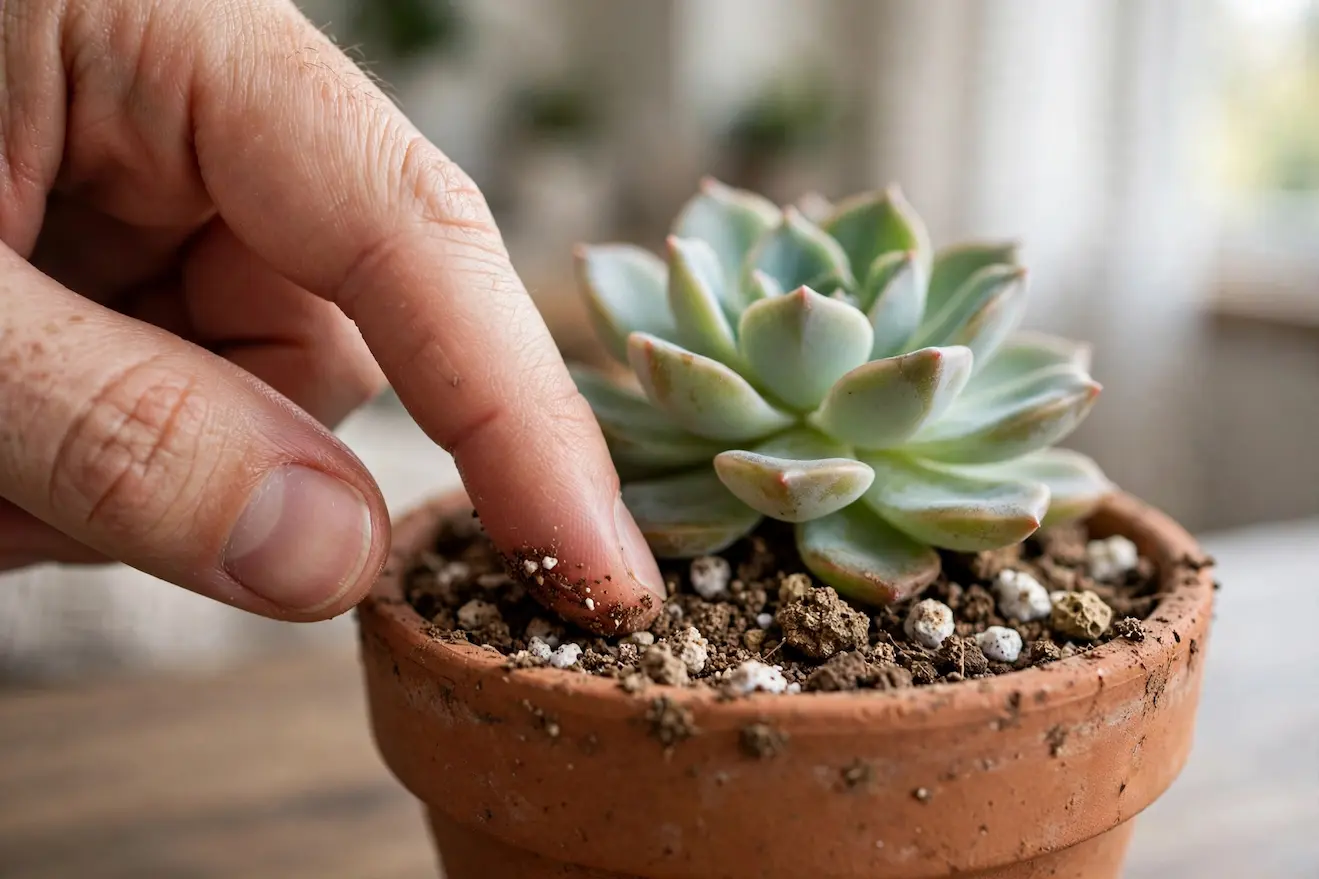
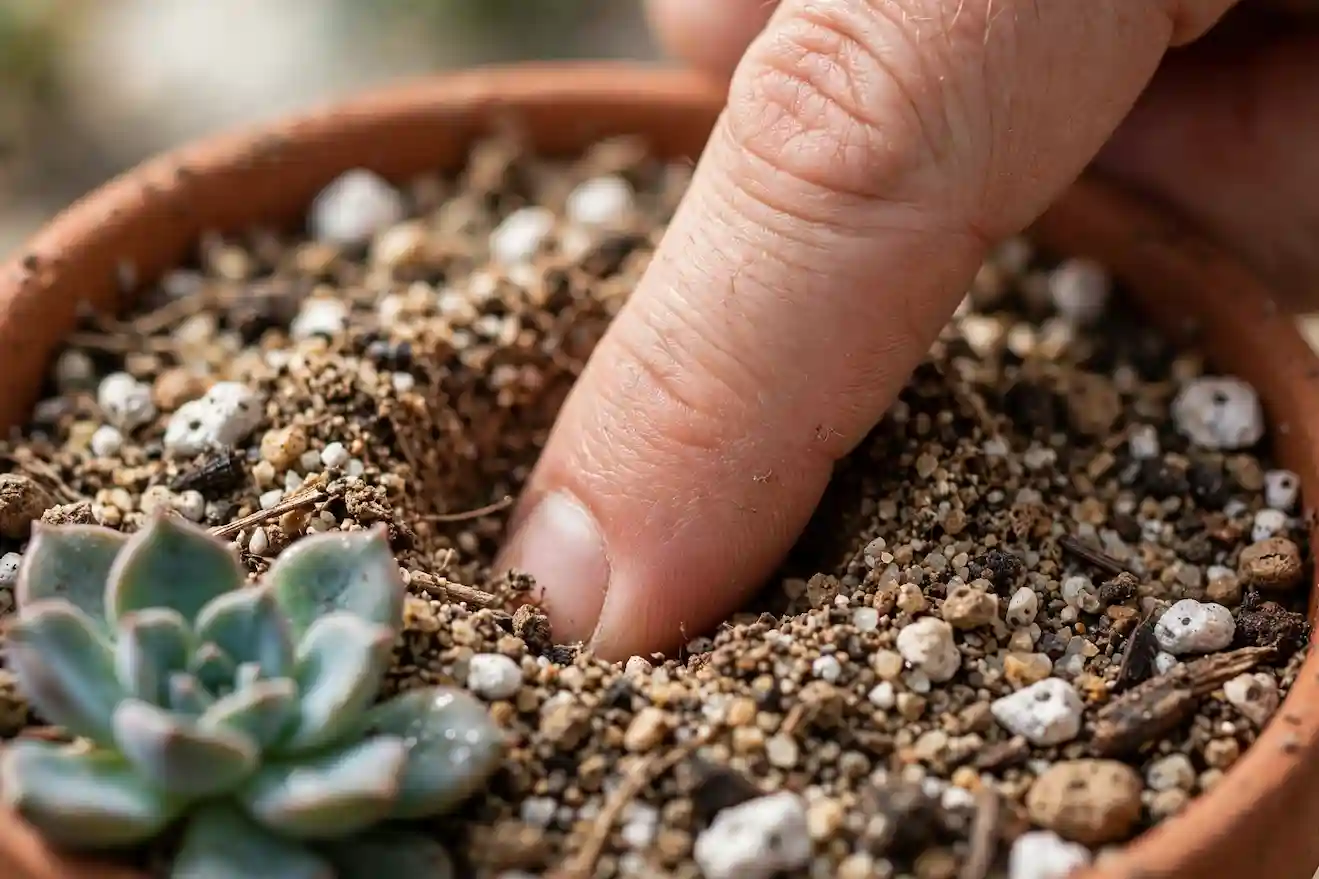
Before you water, the mix should be dry all the way through, not just on top. Push a finger 2–3 cm (about an inch) into the soil, or lift the pot — a light pot means the soil has dried out.
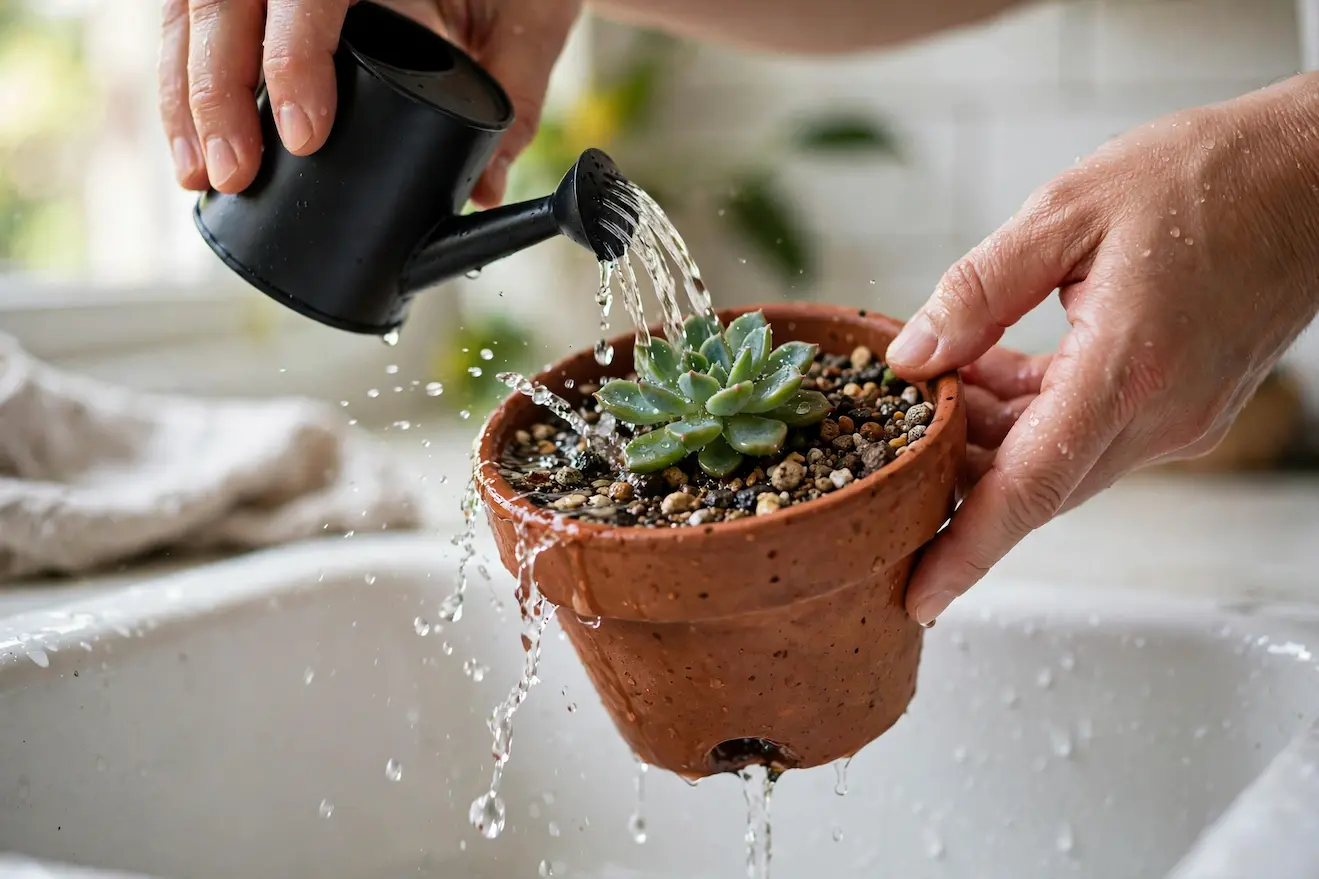
Step 2: Soak thoroughly until water drains
Pour water evenly around the whole soil surface — not just one side — until it runs freely from the drainage hole. Avoid splashing the rosette; water trapped between leaves invites rot.
Step 3: Empty the saucer
Never let the pot sit in standing water. Tip out whatever collects in the saucer within a few minutes so the roots aren’t left soaking.
Top watering vs bottom watering
Bottom watering — setting the pot in a tray of water for 10–15 minutes — pulls moisture up to the deepest roots and keeps foliage dry, ideal for fuzzy or tight-rosette species. Top watering is faster and helps flush salt buildup from the soil. Alternate between them when you can.
What Changes How Often You Water
Frequency isn’t fixed because these five factors speed up or slow down how fast the soil dries.
Light and temperature
More bright light and warmth means faster drying, which means more frequent watering. A succulent on a sunny sill drinks far more than one in a dim corner.
Soil mix
A gritty, well-draining cactus-and-succulent mix dries in days; ordinary potting soil holds water for far too long and is the fastest route to root rot. Amend regular soil with perlite, pumice, or coarse sand.
Pot type
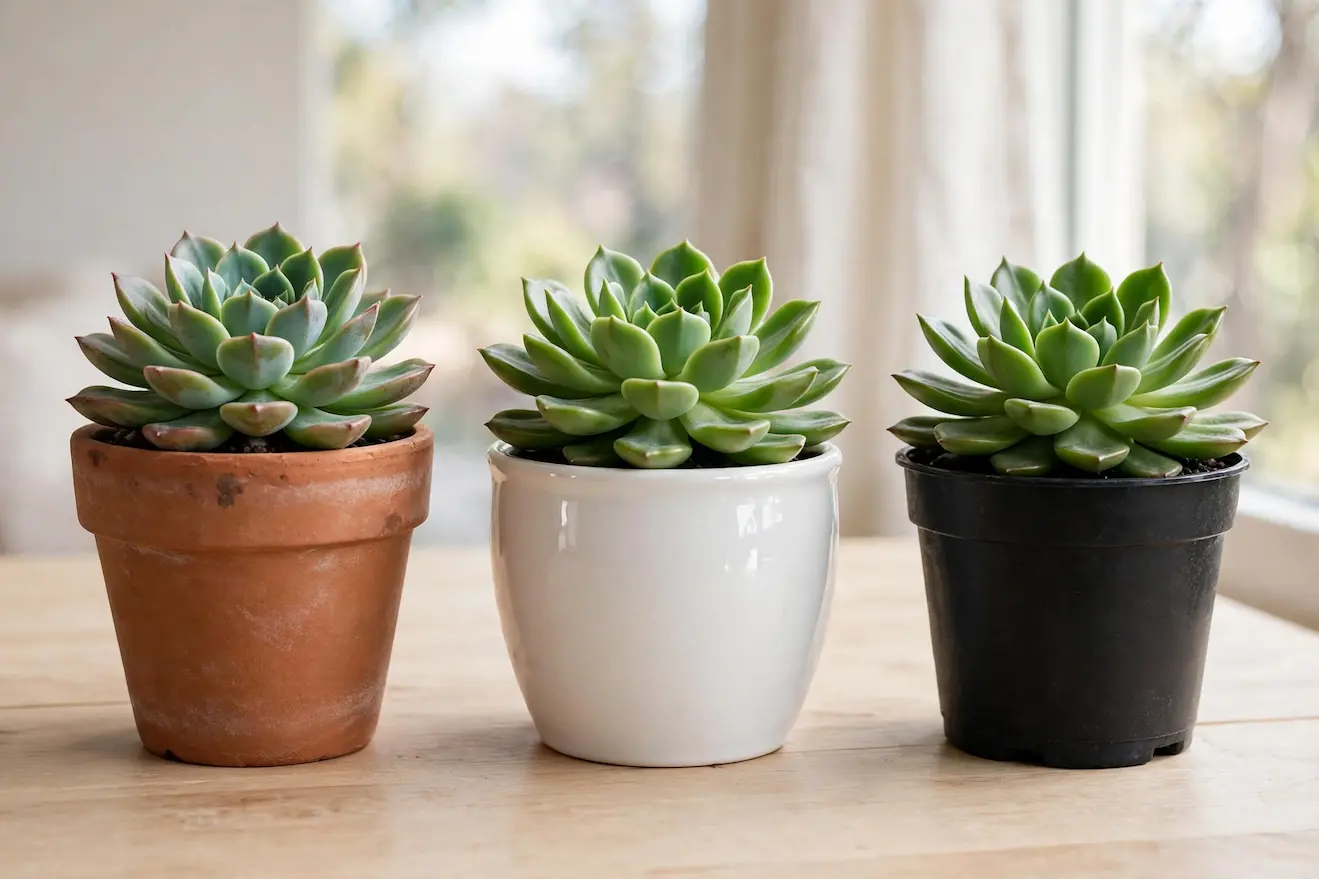
Terracotta is porous and wicks moisture out, so plants dry faster and need water sooner. Glazed ceramic and plastic hold moisture longer. Pots with no drainage hole are the riskiest — water very sparingly or repot.
Season and dormancy (the CAM factor)
Succulents use CAM photosynthesis, opening their pores at night to conserve water. Most slow down or go dormant in winter and need far less water; cutting back in the cold season is the best rot insurance there is.
Indoors vs outdoors
Indoor air is stiller and dimmer, so soil dries slowly — water less. Outdoor plants in sun and wind dry quickly and may need water two to three times as often, unless the weather is wet.
How to Tell When a Succulent Needs Water
The plant tells you what the calendar can’t. Run through these signals before every watering:
- Firm, plump leaves = fully hydrated. Wait.
- Lower leaves slightly wrinkled or soft = thirsty. Time to water.
- Soil dry 2–3 cm down (finger test) = ready.
- Pot feels light when lifted = dry.
- Moisture meter reads 'dry' — useful, but confirm with the finger test.
Rule of thumb: when in doubt, wait. Succulents bounce back from a missed watering far more easily than from rot.
Overwatering vs Underwatering: Know the Difference
Both problems can look like a struggling plant, but the fixes are opposite. Here’s how to tell them apart at a glance:
| Sign | Overwatered | Underwatered |
|---|---|---|
| Leaf feel | Soft, mushy, squishy | Wrinkled, thin, flexible |
| Leaf color | Yellow, translucent, browning | Dull, faded, dry tips |
| Recovery | Slow; may need repotting | Fast; plumps up after watering |
| Worst case | Root rot (black, mushy roots) | Shriveling, dropped leaves |
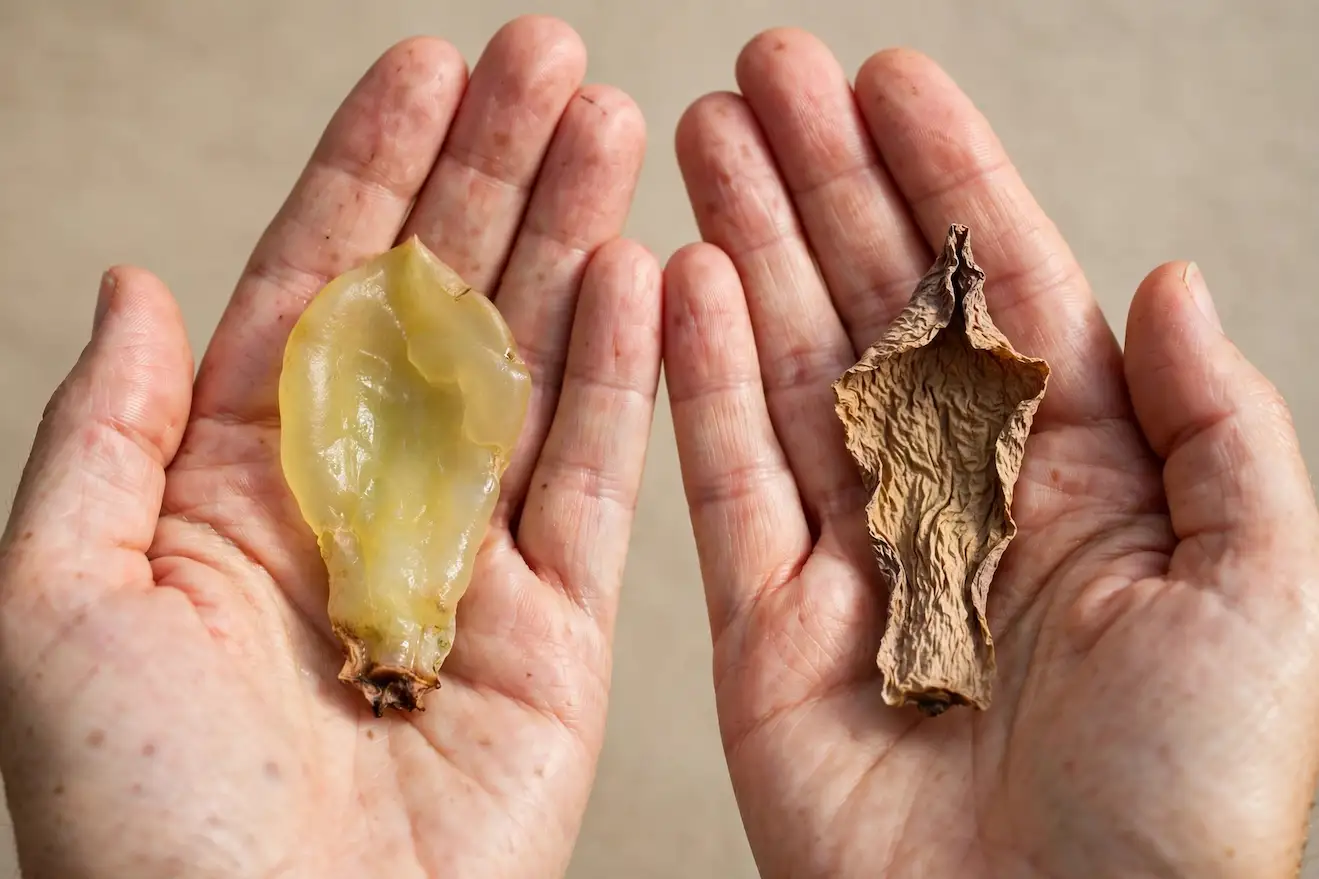
Seeing soft, translucent leaves? Act fast — read our guide on how to spot and reverse an overwatered succulent, and what to do when leaves start dropping or falling off.
Watering by Succulent Type
Most succulents follow soak-and-dry, but a few have quirks worth knowing:
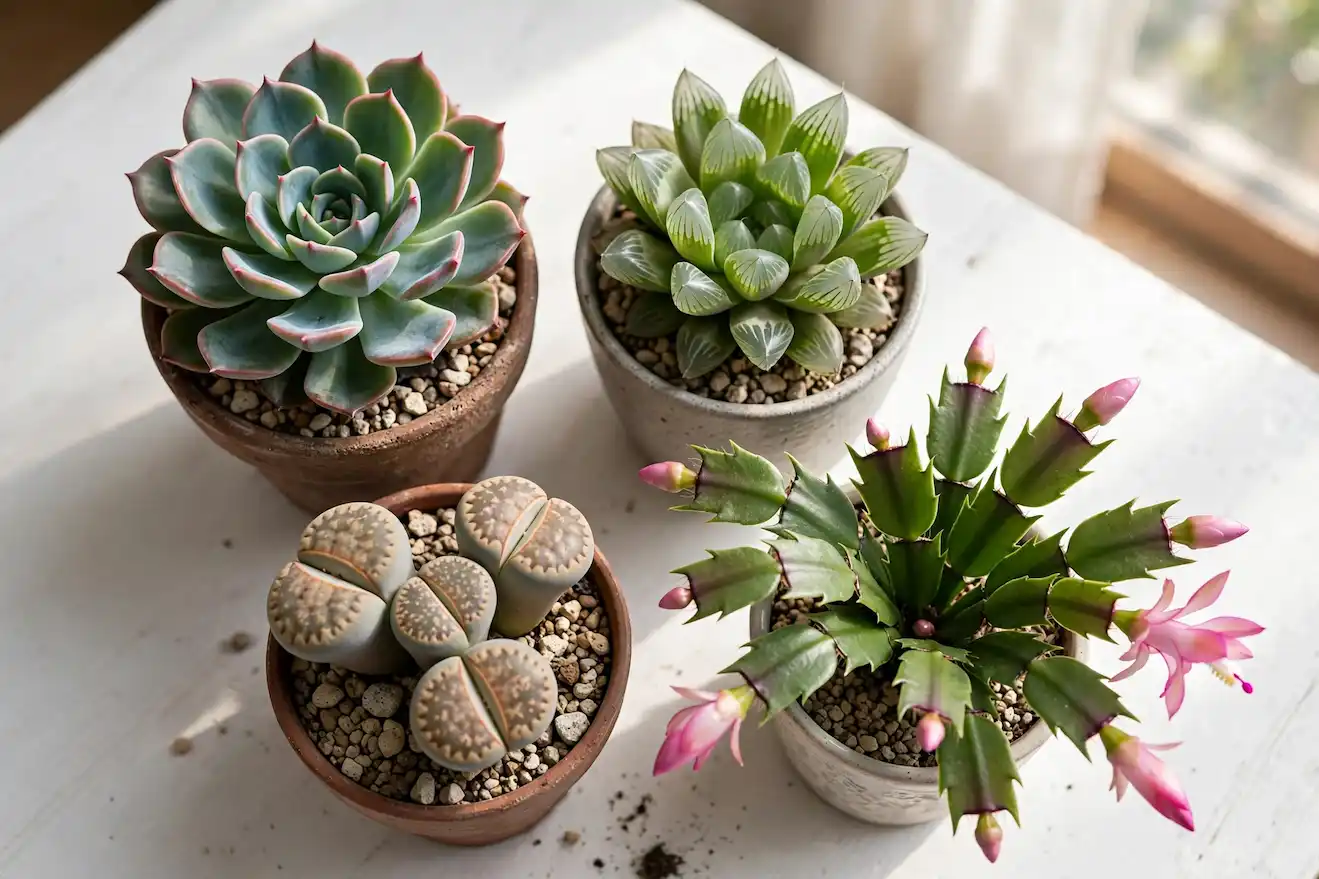
- Echeveria, Sedum, Crassula, Graptopetalum: classic soak-and-dry; keep water off the rosette.
- Haworthia & Aloe: tolerate a little more shade and slightly more frequent watering than desert types.
- Lithops (living stones): very specific — water lightly in growth, stop almost entirely in dormancy and while they split.
- Epiphytic cacti (Christmas/Thanksgiving cactus): not desert plants — they like more regular water and some humidity.
Succulent Watering FAQ
About every 1–2 weeks in spring and summer, and every 3–4 weeks (or less) in fall and winter — always confirming the soil is completely dry first.
When the lower leaves start to wrinkle slightly and the soil is dry 2–3 cm down. Firm leaves mean it’s still hydrated; wrinkled leaves plus dry soil mean it’s time.
Yes — it’s the number one cause of succulent death. Overwatering leads to soft, translucent leaves and root rot. When in doubt, wait.
Much less: roughly every 3–6 weeks depending on species and temperature, because most succulents slow down or go dormant and use very little water.
Typically 1–3 months depending on species, size and season, since they store water in their leaves and stems.
Both work with soak-and-dry. Bottom watering feeds deep roots and keeps foliage dry; top watering is faster and flushes salt buildup. Alternating is ideal.
Still Not Sure If You're Overwatering?
Match what you’re seeing on the leaves to the right fix — we’ll take you straight to the rescue steps.
Part of the Succulent Care hub.