
Succulent Care: Keep Yours Alive & Fix Common Problems
Your complete succulent hub — diagnose the symptom, understand the cause, and follow simple, beginner-friendly steps to bring a struggling or dying succulent back to health.
Why Succulents Struggle (and How This Hub Helps)
Succulents are built to survive drought, not overcare. Most problems trace back to a handful of causes — too much water, too little light, poor-draining soil, or pests — and each one shows up as a visible symptom on the leaves or stem. Once you can read that symptom, the fix is usually straightforward.
This hub groups every succulent issue by what you can actually see. Pick the symptom that matches your plant below, and you’ll land on a step-by-step guide that walks you from cause to recovery — no horticulture jargon, no guesswork.
Common Succulent Problems — Find Your Fix
Match what you’re seeing to the right guide.
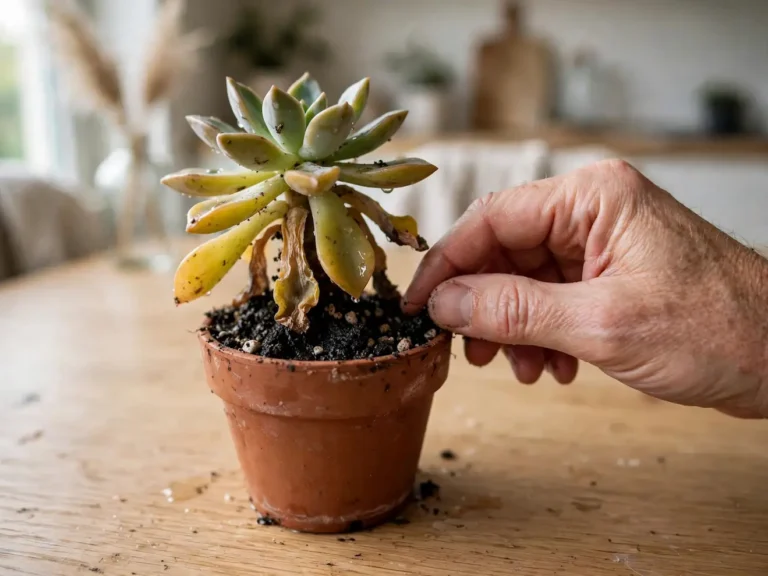
Watering & Overwatering
The #1 killer of succulents. Learn how often to water and how to spot — and reverse — overwatering.
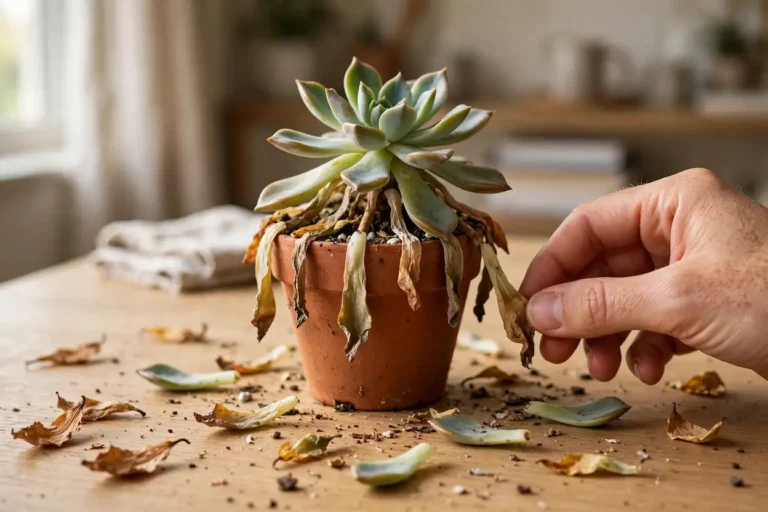
Leaves Falling & Drooping
Dropping, drooping or falling leaves? Find the real cause behind sudden leaf loss and how to stop it.
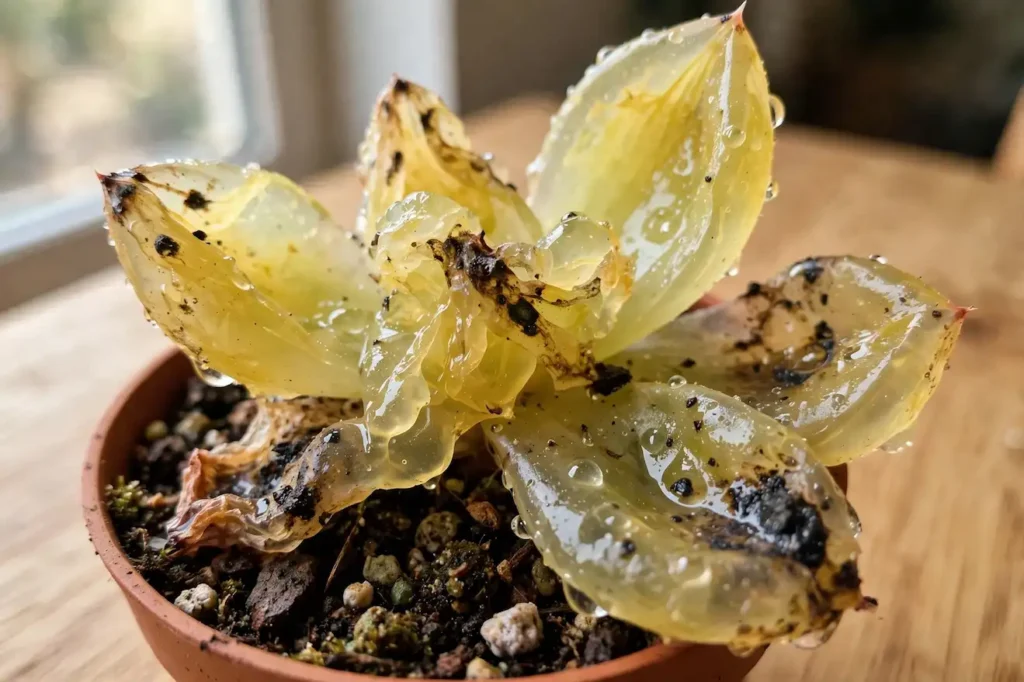
Soft, Mushy or Yellow Leaves
Soft, shriveled, translucent or discolored leaves each mean something. Decode the signal and act.
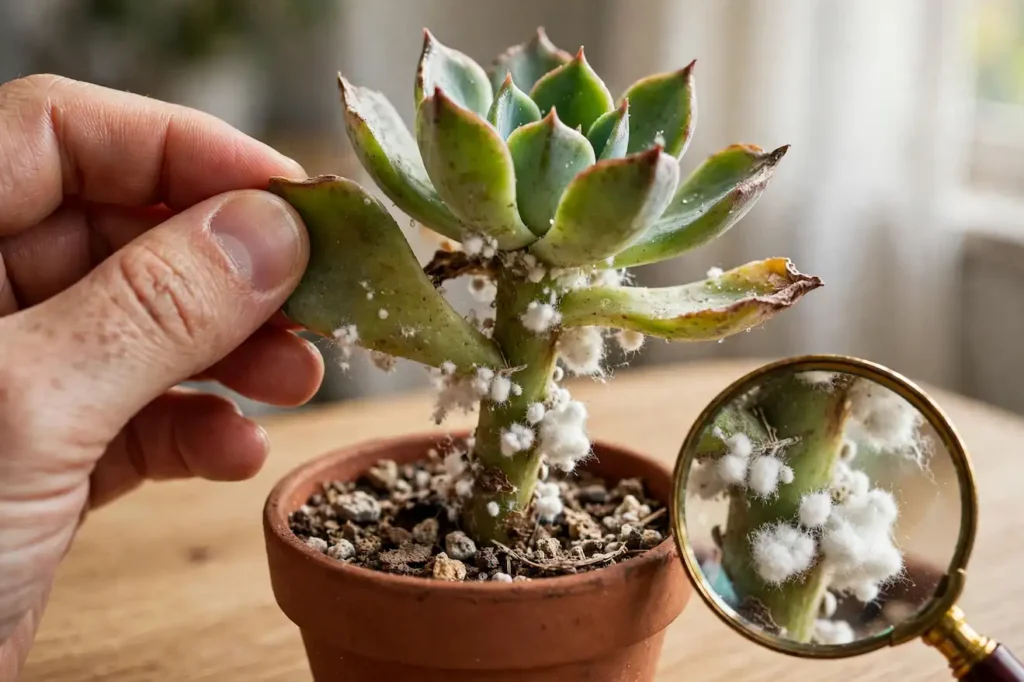
Pests & Diseases
Mealybugs, mold, rot and white spots — identify the culprit and treat it before it spreads.
Succulent Care Basics
The four things that keep any succulent alive. Get these right and most problems never start.
Light
Most succulents want 4–6 hours of bright, indirect light. Stretching or pale growth means they need more.
Soil & Pot
Use gritty, well-draining soil and a pot with a drainage hole. Standing water is what rots roots.
Watering
Soak fully, then let the soil dry out completely before the next watering. When in doubt, wait.
Dormancy
Growth slows in winter. Cut watering right back during the dormant season to avoid rot.
Watering is where most succulents die — for the full routine by season and pot type, see the complete succulent watering guide.
Succulent Care FAQ
Why is my succulent dying?
The most common cause is overwatering, which leads to soft, mushy leaves and root rot. Other frequent causes are too little light (causing stretched, weak growth), poor-draining soil that stays wet, or a pest infestation. Check the leaves and stem first: firm and plump is healthy, soft or translucent points to a watering problem, and webbing or white fuzz points to pests.
How often should I water a succulent?
There’s no fixed schedule — water by the soil, not the calendar. Soak the soil thoroughly, then wait until it has dried out completely before watering again, which can be anywhere from one to three weeks depending on light, pot and season. Water far less in winter. For a full breakdown, see our succulent watering guide.
Can a dying succulent be saved?
Often, yes, if there’s still firm tissue somewhere on the plant. Remove it from wet soil, cut away black or mushy roots and stems, let the cuts callous for a day or two, then replant in dry, well-draining soil. Many succulents also regrow from a single healthy leaf, so even a failing plant can give you a fresh start.
Do succulents need direct sunlight?
Most prefer bright, indirect light for several hours a day rather than harsh, all-day direct sun, which can scorch the leaves. If your succulent is stretching toward the window or losing its color, it needs more light; if leaves show dry brown patches, it may be getting too much.
Not Sure What's Wrong? Start With the Symptom.
Pick what you can see and we’ll take you straight to the fix.