
Why Are My Succulent Leaves Falling Off?
Dropping, drooping or falling leaves almost always trace back to one of six causes — and most are fixable. Match what you’re seeing to the right fix with our quick diagnostic, then follow the steps for your case.
First: Is It Normal or a Problem?
Not all leaf drop is bad. If your succulent is shedding only its oldest, lowest one or two leaves slowly over weeks or months, that’s normal aging — the plant is moving energy to new top growth.
Worry when: many leaves drop at once, leaves fall at the slightest touch, or the leaves are mushy, discolored or shriveled. Those point to a fixable problem — and the diagnostic below tells you which one.
Quick Diagnostic: Match the Symptom to the Cause
Look closely at the fallen leaves and the base of the plant, then find your row:
| What you see | Likely cause | What to do |
|---|---|---|
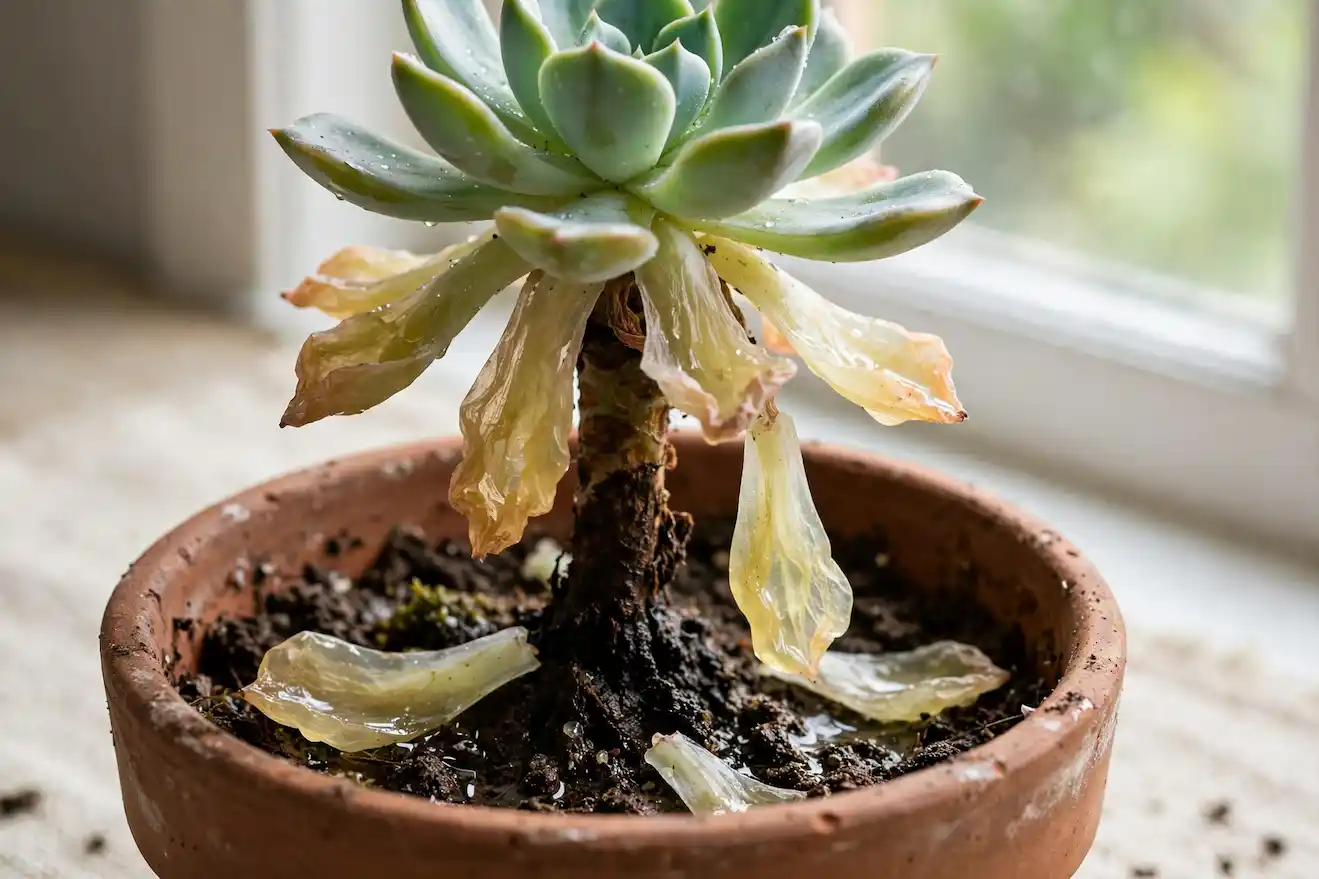
| Soft, mushy, translucent; black/brown stem base; drops bottom-up | Overwatering / root rot | Dry out, remove rot, repot — see rescue |
| Wrinkled, thin, crispy or dry before dropping | Underwatering | Water deeply, then soak-and-dry |
| Sudden mass drop after a move or cold draft | Light / temperature shock | Stabilize location, let it acclimate |
| Only the bottom 1–2 leaves, slowly over time | Natural shedding | Nothing — it’s normal |
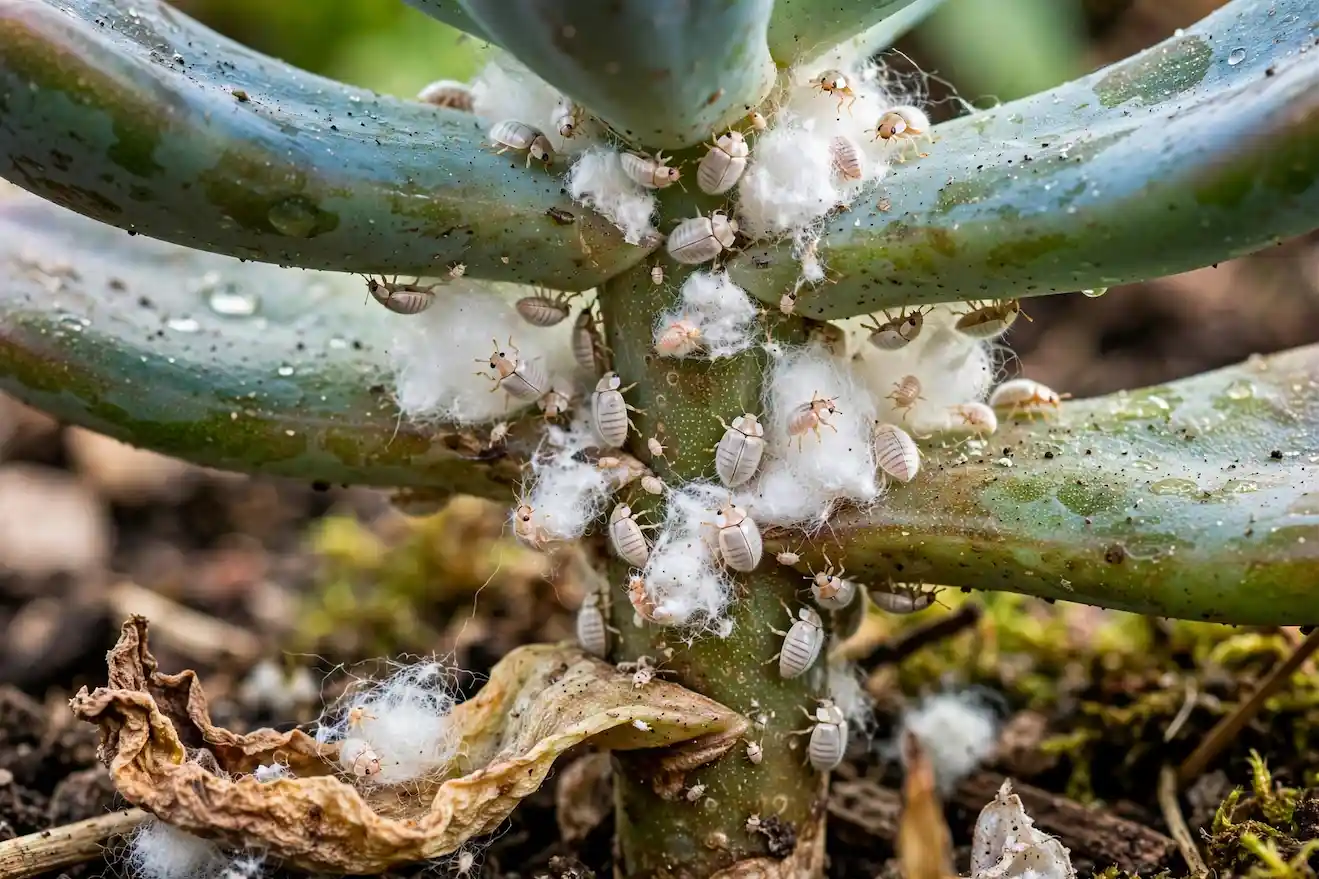
| White fuzz, webbing or sticky residue | Pests (mealybugs / mites) | Isolate and treat |
| White crust on soil + weak, elongated growth | Over-fertilizing | Flush soil, stop feeding |

The 6 Causes of Falling Leaves, Explained
1. Overwatering (the #1 cause)
Too much water waterlogs the tissue; leaves turn soft, translucent and yellow and drop from the bottom up, often with a mushy, darkened stem base. That’s root rot setting in — act fast with our guide on how to save an overwatered succulent.
2. Underwatering
Starved of water, the plant draws from its lower leaves first. They wrinkle, thin out and go crispy before dropping. Water deeply, then return to a soak-and-dry rhythm.
3. Light or temperature shock
Succulents react to sudden change. Moving from low to bright light, a cold draft, or a big temperature swing can make a plant dump leaves to reduce its surface area while it adjusts. Keep it in a stable spot and change conditions gradually.
4. Natural shedding
Healthy succulents retire their oldest lower leaves as they grow. If it’s just the bottom one or two over time and the rest of the plant looks firm and healthy, do nothing.
5. Pests
Mealybugs (white cotton-like fuzz) and spider mites (fine webbing) weaken leaves until they drop. Isolate the plant, wipe off the pests, and treat with insecticidal soap or diluted neem oil.
6. Over-fertilizing
Too much feed burns the roots and leaves salts in the soil (a white crust on top), causing weak, leggy growth and leaf drop. Flush the soil with water and stop fertilizing.
Will the Leaves Grow Back? (And a Bonus)
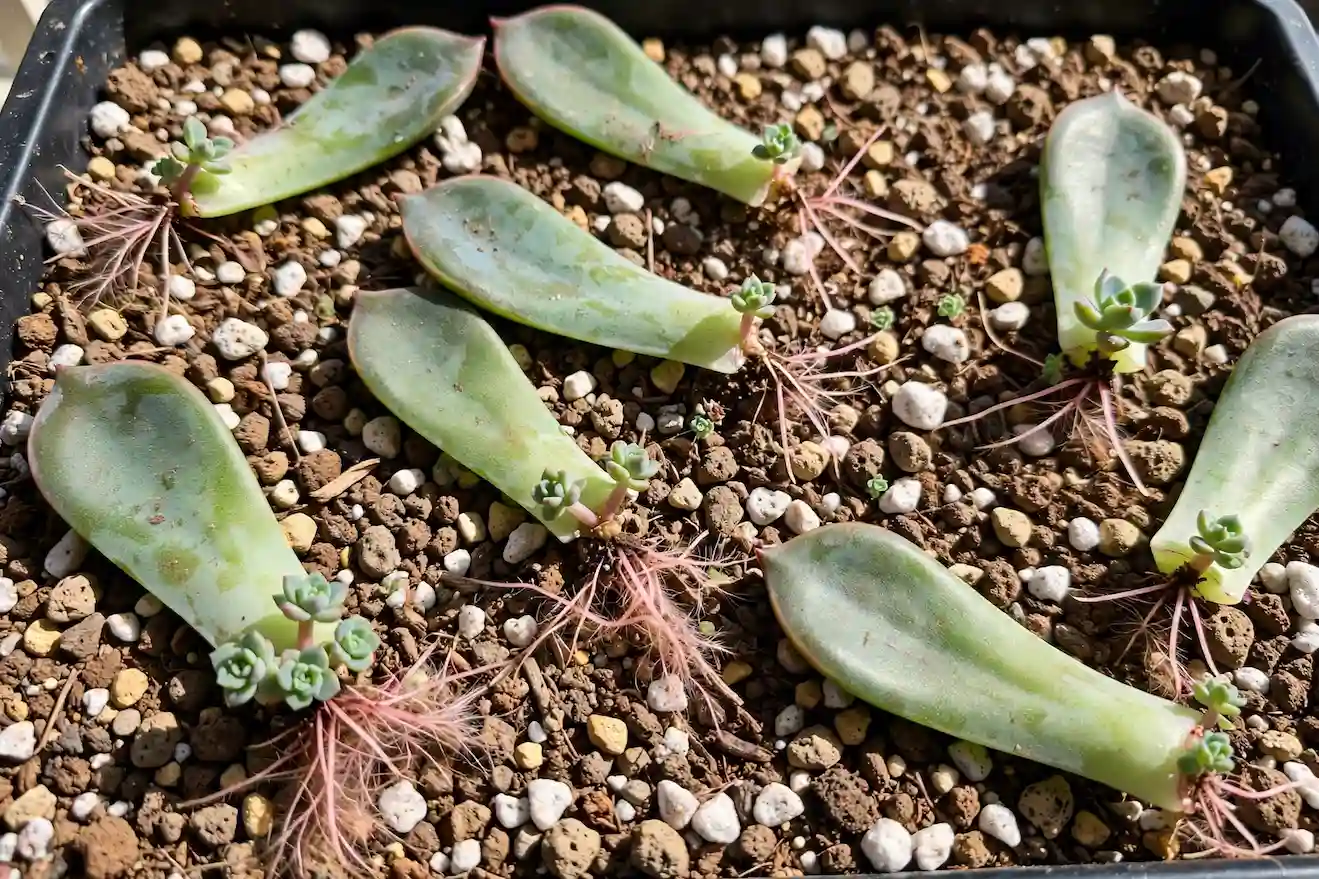
A succulent won’t regrow leaves on the exact spot they fell from, but a healthy plant keeps producing new leaves from the top. The bonus: many healthy fallen leaves will propagate into whole new plants.
Lay a clean, calloused leaf on gritty soil, mist lightly every few days, and in 2–6 weeks tiny roots and a baby rosette often appear. Not every leaf takes, but most healthy ones do.
How to Prevent Leaf Drop
- Water only when the soil is fully dry (soak-and-dry) and use gritty, well-draining mix
- Give bright, consistent light and avoid sudden moves or cold drafts
- Inspect regularly for pests
- Fertilize lightly and infrequently
The single biggest lever is watering — get it right with our succulent watering guide.
Succulent Leaves Falling Off FAQ
Yes, if it’s just the oldest lower one or two leaves shed slowly over time. A sudden mass drop, or mushy or shriveled leaves, signals a problem.
Leaves that detach at the lightest touch usually mean overwatering and early rot. Check the stem base and cut back on water.
Drooping and wilting share the same main causes: most often overwatering, sometimes underwatering or too little light. Use the diagnostic above.
Yes — gently remove clearly dead or mushy leaves to prevent fungal issues. You can propagate the healthy ones.
Usually, once you fix the cause. Succulents regrow from the top and are easy to propagate from the leaves that dropped.
Watering Is Almost Always the Root Cause
Over- and under-watering drive most leaf drop. Nail your routine and the problem usually stops.
Part of the Succulent Care hub.