
Overwatered Succulent: Signs and How to Save It
Caught it early? You can almost always save it. Learn the exact signs of overwatering, a quick “can it be saved?” triage, and the step-by-step rescue — plus how to regrow a plant that’s already rotting.
Can an Overwatered Succulent Be Saved?
Usually yes — as long as there’s still firm, healthy tissue somewhere on the plant. Overwatering kills from the roots up, so the sooner you act, the more you save.
If the leaves are soft and translucent but the stem is still firm, a simple dry-out and repot often does it. If the stem is black and mushy, the roots are already rotting — but you can still rescue the plant by propagating a healthy top or leaves. The key is to act fast and stop watering immediately.
Signs of an Overwatered Succulent
Overwatering shows on the leaves and stem before you see it in the roots. Watch for these, starting with the earliest:
- Leaves look translucent or glassy, then yellow or darken
- Leaves feel soft, mushy or squishy — not firm
- Lower leaves drop at the slightest touch
- The stem develops brown or black patches
- Soil stays wet and soggy days after watering
- A faint rotting smell or mold on the soil surface
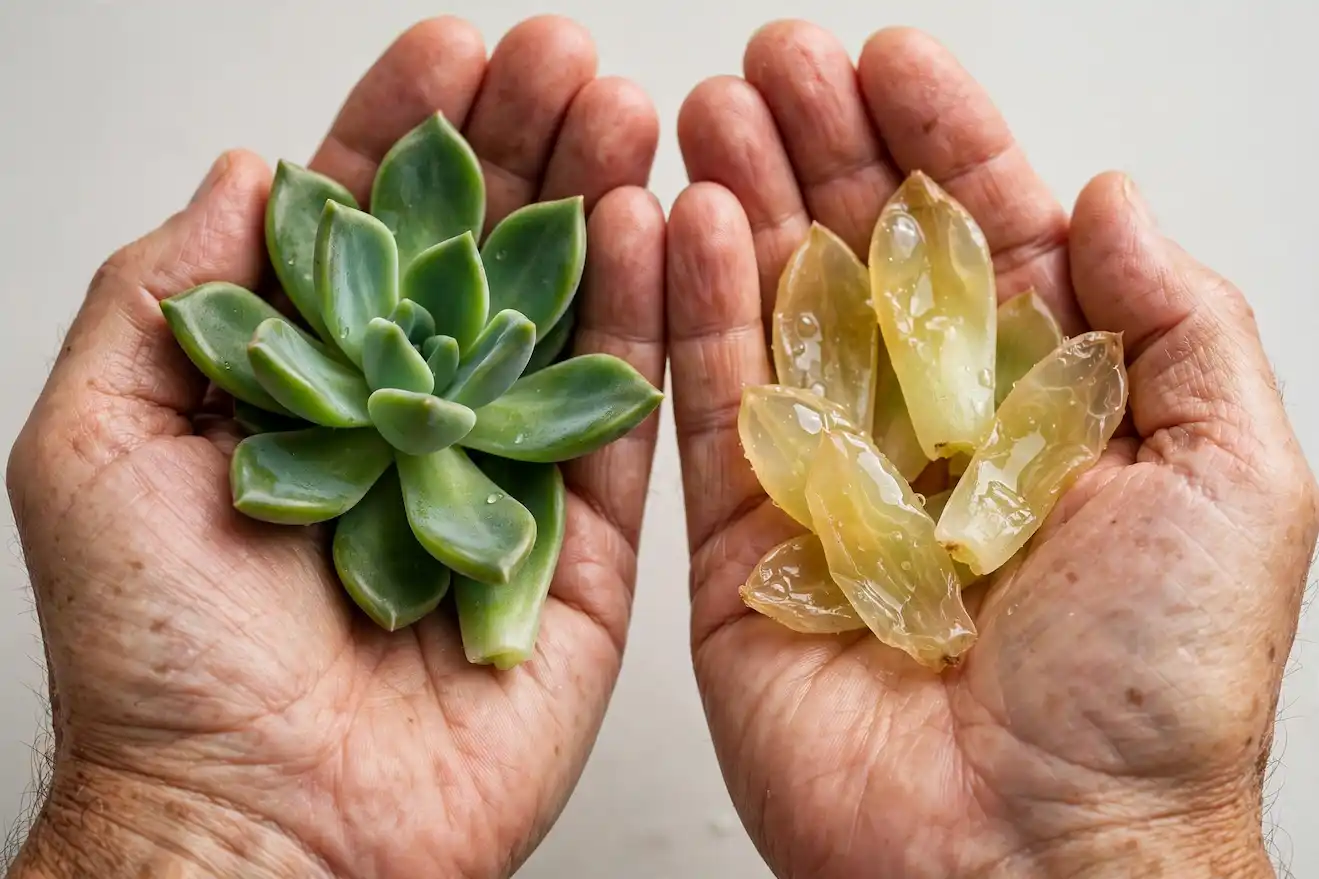
The translucency happens because the water-storage cells have taken up more than they can hold and are bursting — a clear signal you’re watering too often.
Is It Early or Advanced? (Quick Triage)
Before you start cutting, work out how far the damage has gone:
- Early stage: a few soft or translucent leaves, but the stem is firm and green → dry-out + repot usually saves the whole plant.
- Advanced stage: many mushy leaves, soft stem, brown/black discoloration, a smell → roots are likely rotting; save the healthy parts by propagation.
- Too far gone: the entire stem is black and collapses → the original plant can’t be saved, but firm leaves can still start new plants.
Rule: firm, green tissue = savable. Black, mushy tissue = remove it or propagate around it.
How to Save an Overwatered Succulent (Step by Step)
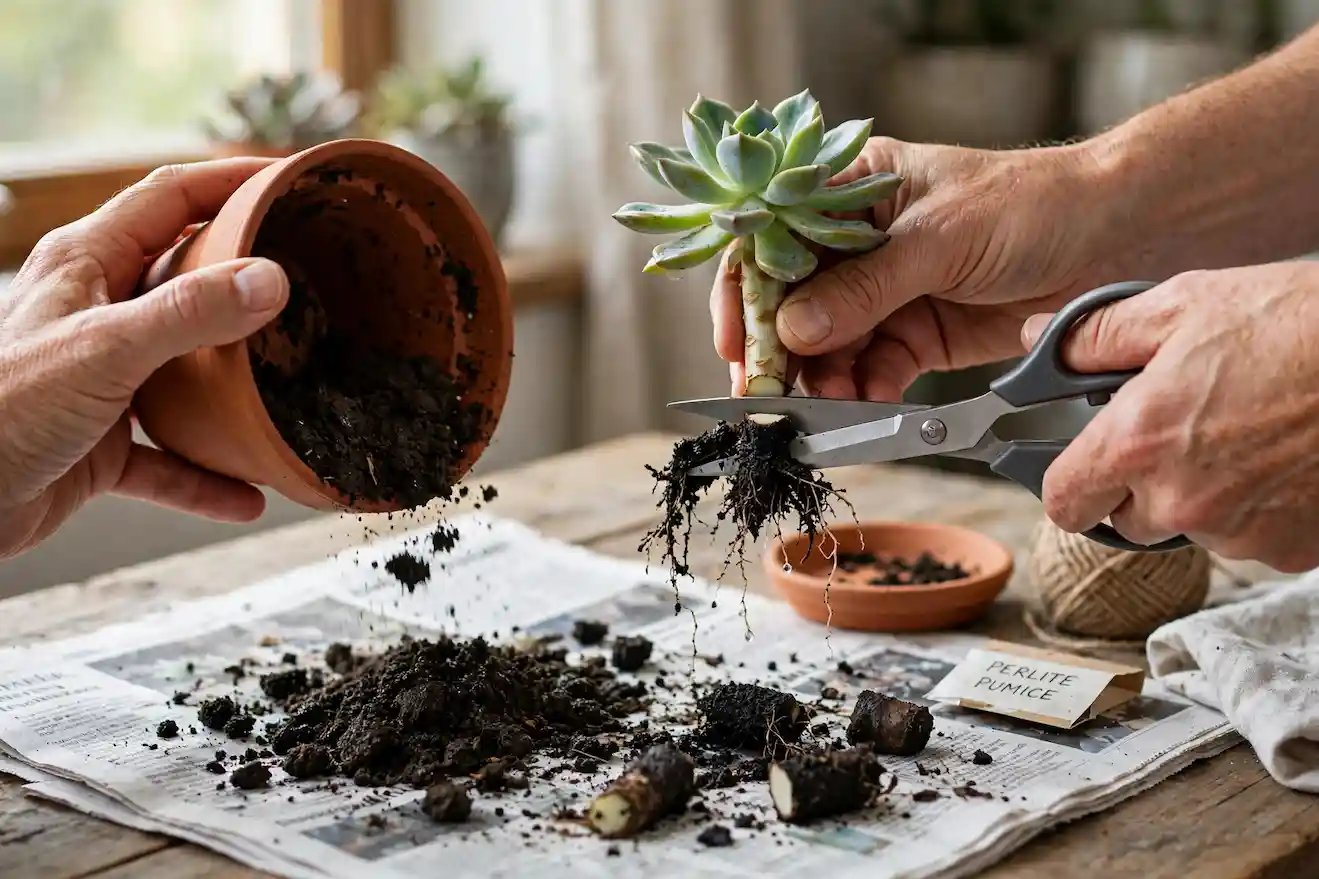
Step 1: Stop watering and unpot the plant
Gently remove the succulent from its pot and shake off the wet soil so you can see the roots and the base of the stem.
Step 2: Remove all mushy leaves and rotted parts
Pluck off every soft, translucent leaf — they won’t recover. If the stem has brown or black areas, cut back to firm, pale-green tissue with a clean, sharp blade.
Step 3: Check and trim the roots
Rinse the roots and cut away any brown, black or slimy ones until only firm, light-colored roots remain. If every root is rotted, cut the stem above the rot and treat the top as a cutting.
Step 4: Let the cuts callus and dry
Set the plant or cutting somewhere dry, bright and out of direct sun for 2–4 days so the wounds seal. Dusting the cuts with cinnamon or sulfur helps prevent fungal reinfection.
Step 5: Repot in dry, well-draining soil
Replant in fresh, gritty cactus-and-succulent mix in a pot with a drainage hole. Wait about a week before the first light watering, then return to the soak-and-dry routine.
If the Stem Is Rotting, Propagate to Save It
When the base is too far gone, you can still keep the plant going from its healthy parts.
Beheading
Cut off the healthy top of the plant well above any rot with a clean blade. Let it callus for a few days, then plant it in dry, well-draining mix — it will grow new roots.
Leaf propagation
Gently twist off firm, healthy leaves in a clean break (no torn bits). Let them callus 5–7 days, lay them on gritty soil, and mist lightly until tiny roots and rosettes appear.
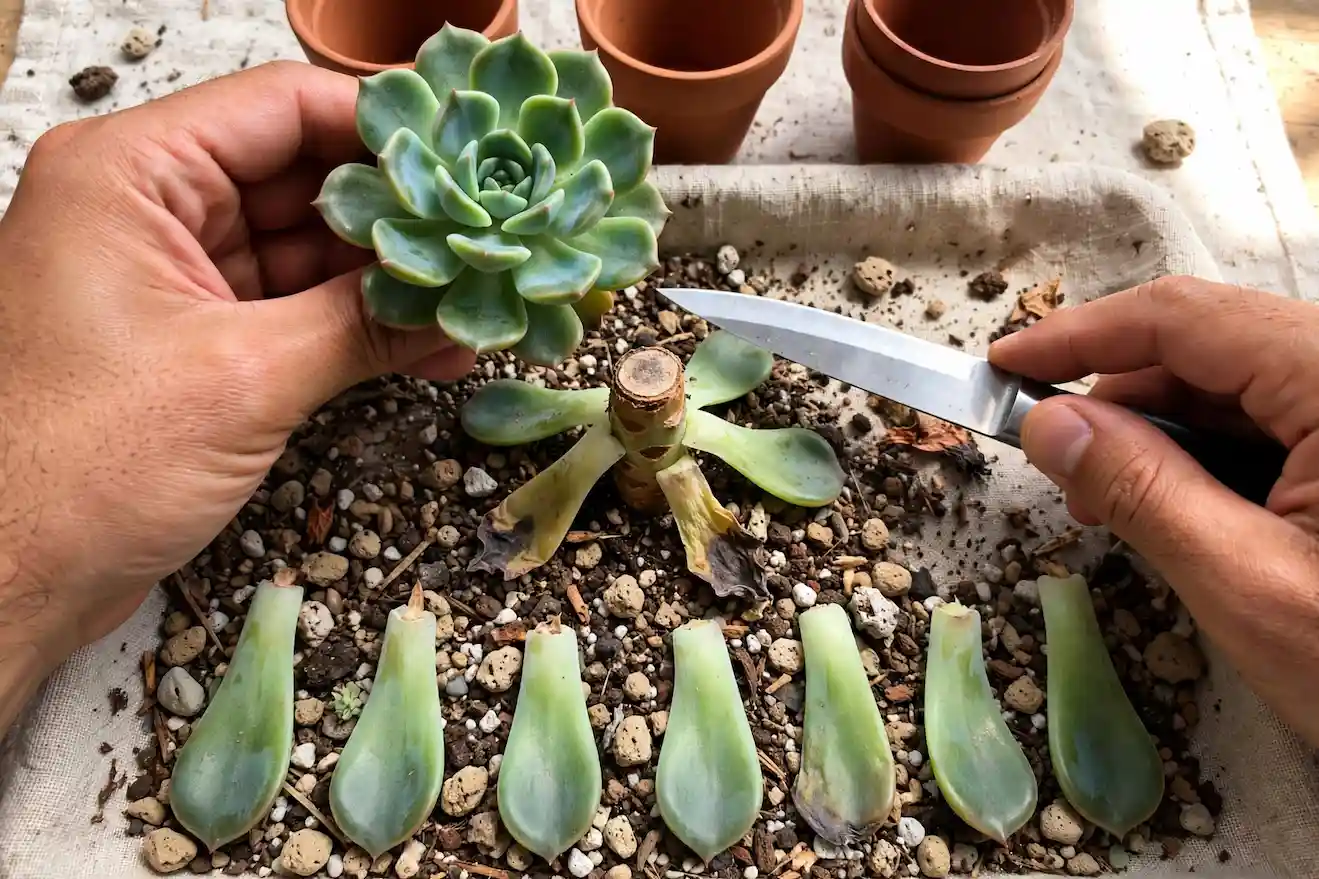
Even a plant that looks lost can give you several new ones this way.
Overwatered or Underwatered? Don’t Confuse Them
They can look similar but need opposite fixes:
| Sign | Overwatered | Underwatered |
|---|---|---|
| Leaf feel | Soft, mushy, squishy | Wrinkled, thin, flexible |
| Color | Yellow, translucent | Dull, dry tips |
| Soil | Wet, soggy | Bone dry |
| Fix | Dry out + remove rot | Water now |
For the full breakdown and the correct frequency, see the complete succulent watering guide.
How to Stop It Happening Again
- Use gritty, well-draining soil and a pot with a drainage hole
- Water only when the soil is completely dry (soak-and-dry)
- Water less in winter, when growth slows
- Never let the pot sit in a saucer of water
Dial in your routine with our succulent watering guide.
Overwatered Succulent FAQ
Sometimes, if you stop watering and the soil dries quickly, but removing the rotted parts greatly improves the odds.
With early action, a few weeks; propagated cuttings take longer — from a few weeks to a couple of months to root.
Yes. Remove the wet soil and repot in fresh, dry, well-draining mix; sitting in soggy soil is what keeps the rot going.
No. Soft, translucent leaves won’t recover, so remove them and focus on saving the firm, healthy tissue.
Rotted roots are brown or black, soft or slimy, sometimes with a smell; healthy roots are firm and pale.
Get Your Watering Right From Now On
Most succulents die from too much water, not too little. Learn the routine that prevents rot.
Part of the Succulent Care hub.