
The Best Soil for Succulents: A Complete Guide
Root rot almost always starts underground. The right substrate — fast-draining, mostly mineral — is the single biggest thing keeping a succulent alive. Here’s exactly what to use and how to mix it.
Quick Reference: What Goes in Succulent Soil
Match the component to its job. A good mix is roughly two-thirds mineral, one-third organic.
| Component | What it does | Share of mix |
|---|---|---|
| Pumice or perlite | Drainage + aeration (the core) | 50% |
| Coarse sand or grit | Weight + fast drainage | 20% |
| Potting mix or coco coir | Light nutrients + some moisture | 30% |
| Avoid: pure garden soil, peat-heavy mixes | Holds too much water → root rot | 0% |
What Makes Good Succulent Soil
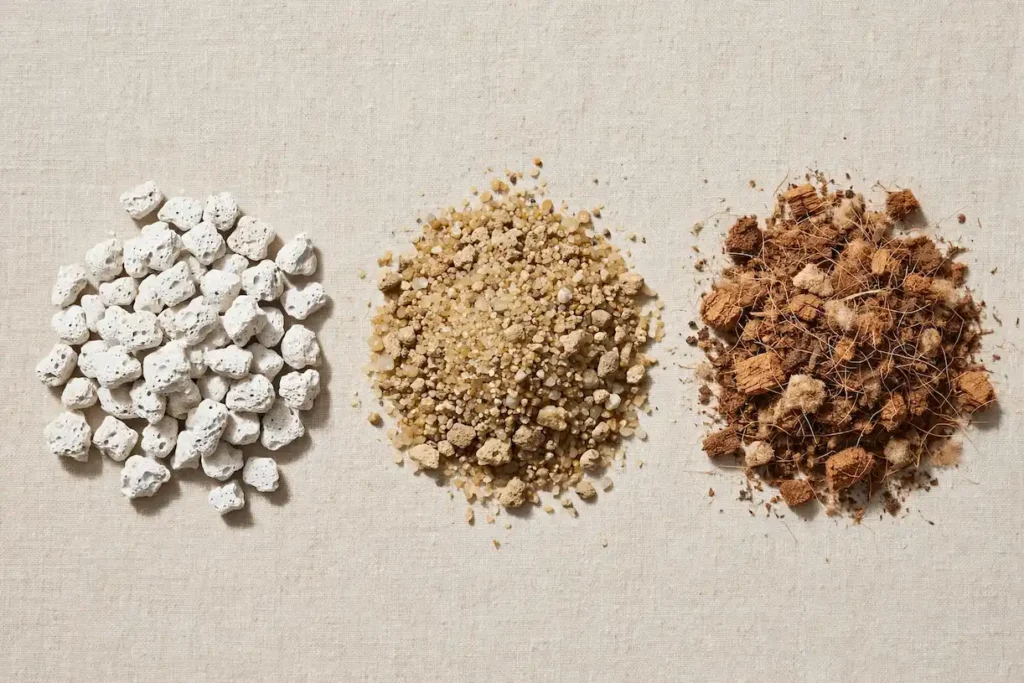
Drainage is everything
Succulents evolved in gritty, rocky ground that dries out fast. Their roots rot if they sit in wet soil for more than a day or two. Good succulent soil lets water rush through and air reach the roots between waterings. If water pools on the surface or takes more than a few seconds to drain, the mix holds too much moisture.
The mineral-to-organic ratio
Organic matter (potting mix, coir) feeds the plant and holds a little water; mineral matter (pumice, perlite, grit) provides drainage and structure. Aim for about 60–70% mineral to 30–40% organic. Indoors, lean more mineral because pots dry slower. Outdoors in heat, you can add a touch more organic.
The Ideal Succulent Soil Recipe
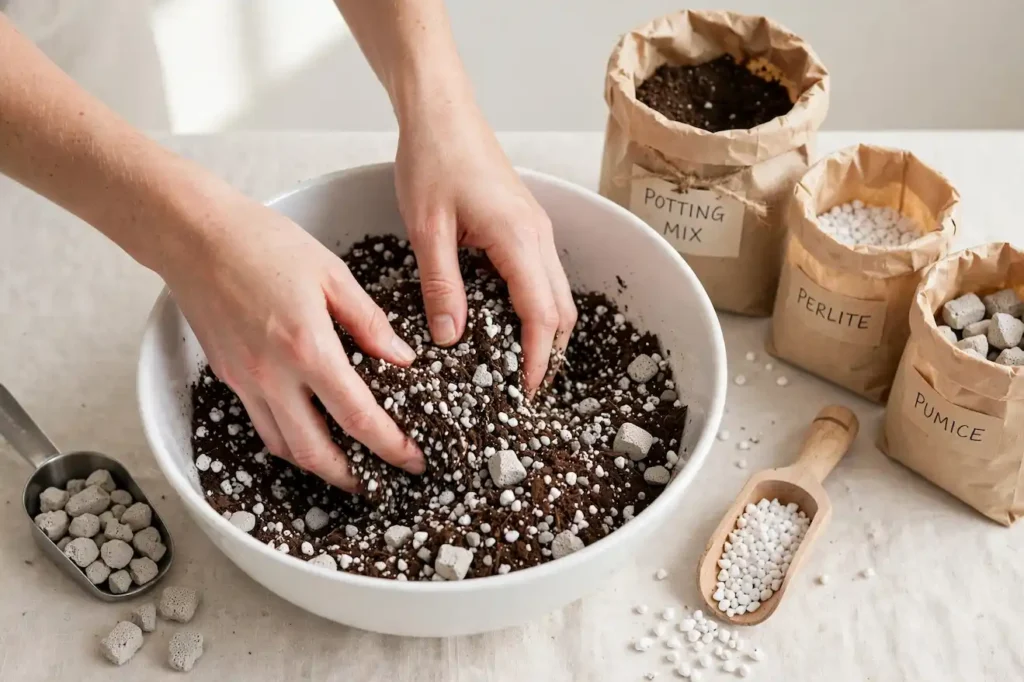
This blend works for almost every common succulent — Echeveria, Sedum, Haworthia, Sempervivum and more. It scales: keep the ratio, change the scoop size.
- Measure your base. Start with 3 parts of a light potting mix or coco coir as your organic base.
- Add the mineral bulk. Mix in 5 parts pumice or perlite. This is what makes the blend fast-draining.
- Add grit for weight. Stir in 2 parts coarse sand or fine gravel so tall plants stay anchored.
- Test the drainage. Fill a pot, water it, and time it. It should drain within seconds, not minutes.
- Adjust to your climate. Humid or indoor? Add more pumice. Hot and dry outdoors? A little more organic is fine.
Want the cheapest possible version and per-species tweaks? See our full DIY succulent soil recipe.
Store-Bought vs. DIY Soil
Bagged “succulent & cactus soil” is convenient but wildly inconsistent — many are just repackaged potting mix that still holds too much water. If you buy one, amend it with an equal part of pumice or perlite before using. Mixing your own costs less per pot and gives you full control over drainage, which is why most experienced growers stop buying pre-made mixes.
Cactus vs. Succulent Soil: Are They the Same?
Nearly. Cacti are succulents, and both want fast-draining, low-organic soil. Desert cacti generally tolerate an even grittier, leaner mix, while leafy succulents appreciate slightly more moisture retention. In practice the recipe above serves both. We break down the exact differences and when they matter in our guide to cactus and succulent soil.
Common Soil Mistakes to Avoid
- Using pure garden or topsoil — it compacts and drowns the roots
- Peat-heavy mixes that repel water when dry, then stay soggy
- Skipping drainage holes — no soil compensates for a sealed pot
- Reusing old, broken-down soil from a plant that had root rot
- Ignoring pot material — terracotta breathes, glazed and plastic hold water longer
Most of these end the same way: soggy roots. If your plant is already suffering, jump to fixing an overwatered succulent.
Succulent Soil FAQ
Not on its own — it holds far too much water. If it’s all you have, cut it 1:1 with pumice or perlite to improve drainage before planting.
Combine a basic potting mix with perlite and coarse sand you buy in bulk. Buying components separately costs far less per pot than bagged succulent soil.
Close enough for most plants. Both are fast-draining and low in organic matter. Cactus mixes are often slightly grittier, which leafy succulents also tolerate.
Refresh it every 1–2 years, or immediately if the plant had root rot. Old soil breaks down, compacts and drains poorly.
They can survive in many mixes, but they thrive only in fast-draining soil. Poor drainage is the number-one cause of succulent death.
Get the Watering Right, Too
Even perfect soil fails if you overwater. Correct watering is the other half of healthy roots.
Part of the Succulent Care hub