
How to Propagate Succulents from Stem Cuttings
Cuttings are the fastest, most reliable way to multiply succulents — and the perfect fix for a tall, leggy plant. One cut can give you two plants: a rooted top and a base that resprouts. Here’s the exact method, why you strip the lower leaves, and how to settle the “how deep” and “when to water” confusion.
Why Cuttings Beat Leaves (for Most Plants)
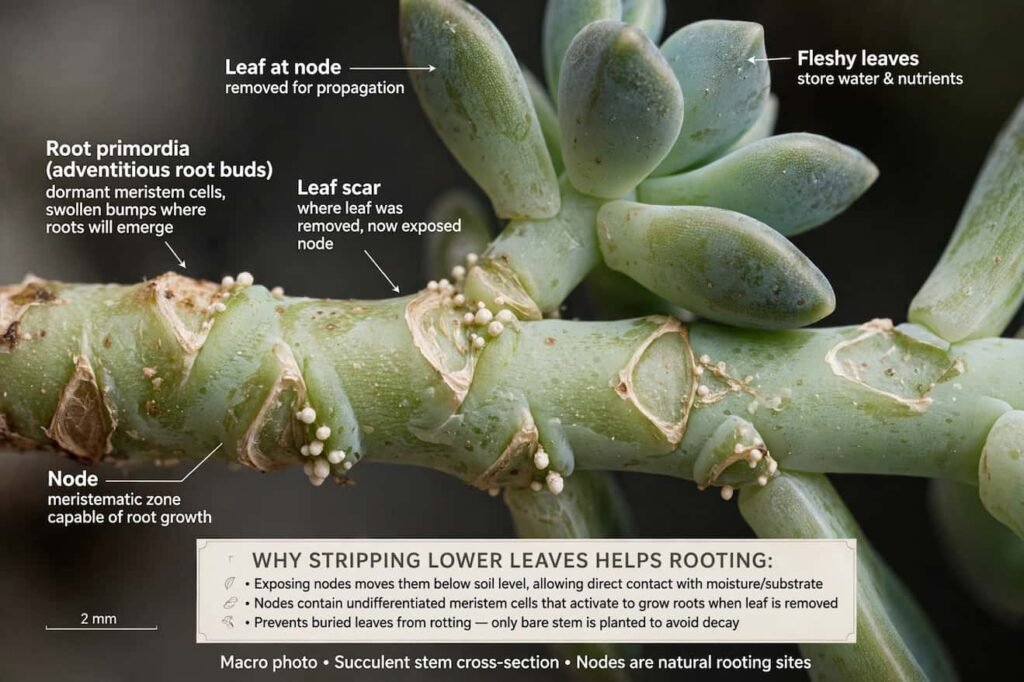
Stem cuttings work on the widest range of succulents, root faster than leaves, and give you a full-size plant right away instead of a tiny leaf baby. They’re the only option for some species — and the go-to fix for a stretched, leggy plant.
| Great from cuttings | Better via another method |
|---|---|
| Sedum (Burro's Tail, Adolphi) | Aloe → offsets (pups) |
| Crassula / Jade | Haworthia → offsets |
| Aeonium (cuttings ONLY) | Sempervivum → offsets |
| Cotyledon | Lithops → seed/division |
| Trailing types (String of Pearls) | — |
If yours is a rosette that clumps rather than grows on a stem, see the other propagation methods.
What You'll Need
- A healthy parent plant with a visible stem
- Clean, sharp scissors or pruning shears (disinfected)
- Gritty, fast-draining succulent mix
- A pot with a drainage hole
- Bright, indirect light
- Optional: rooting hormone; top-dressing grit to hold cuttings upright
Disinfect the blade with alcohol first — a dirty cut can pass disease to both the cutting and the parent. No gritty mix? Use the DIY soil recipe.
Step-by-Step: Stem Cuttings
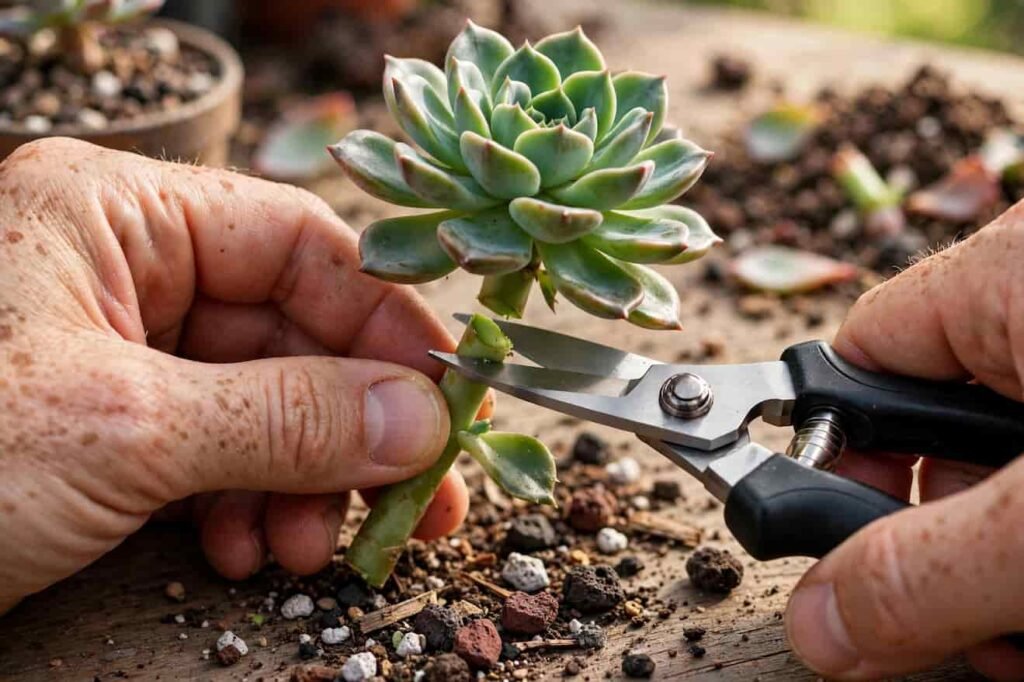
- Take the cutting. With a clean blade, cut a 3–6 inch tip just above a leaf, at a slight angle. Keep a rosette or a few leaves at the top.
- Strip the lower leaves. Clear leaves from the bottom 1–2 inches of stem to expose the nodes (more on why below). Save these leaves — they can propagate too.
- Callus the cut end. Set the cutting in a dry, shaded, airy spot for 3–5 days until the cut seals over. This is the step that prevents rot.
- Plant it. Insert the bare stem into gritty mix just deep enough to stand — about 1 inch, covering at least one node. Don’t bury any remaining leaves.
- Keep it upright. Add a layer of top-dressing grit around the base to hold the cutting steady while it roots.
- Give bright, indirect light. Out of harsh direct sun until established.
- Wait to water. Leave it dry for about a week, then water only when the soil is fully dry (see timing below).
- Pot on once rooted. Roots form in 2–4 weeks; a gentle tug that resists means it’s anchored and growing.
Why You Strip the Lower Leaves: Nodes
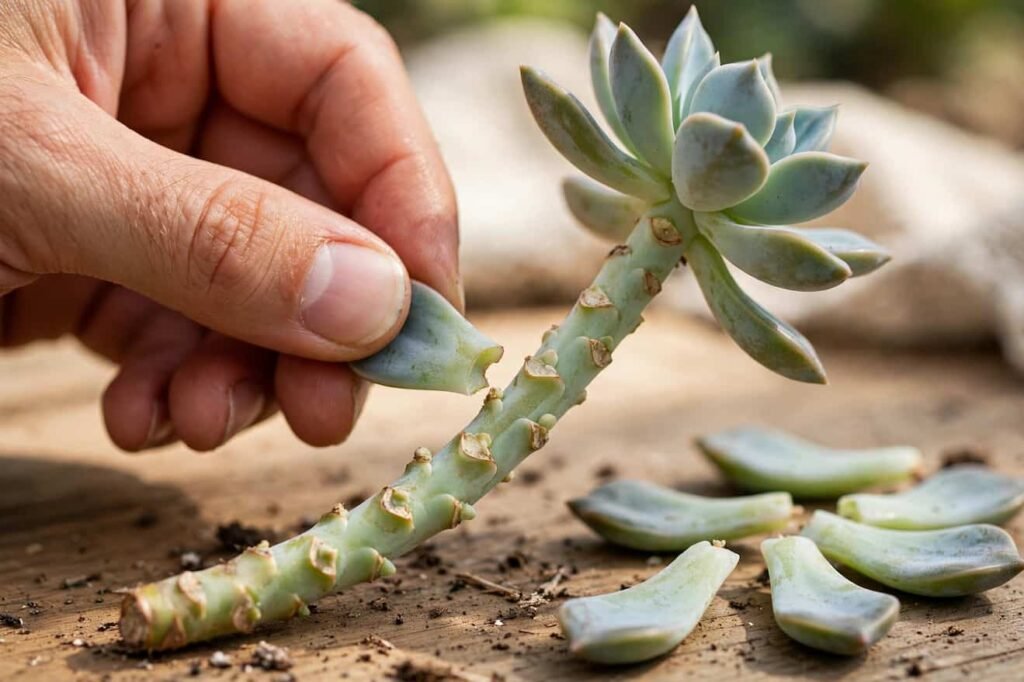
Here’s the mechanism almost every guide skips. New roots don’t come from the raw cut alone — they emerge from the leaf nodes, the points on the stem where leaves were attached. Stripping the lower leaves does two things: it exposes those nodes so roots can form, and it stops buried leaves from rotting underground. Bury at least one node, and that’s where your root system starts.
This is also why a bare, leggy stem is so easy to root — it’s covered in nodes.
Bonus: Beheading a Leggy Succulent (2 Plants from 1)
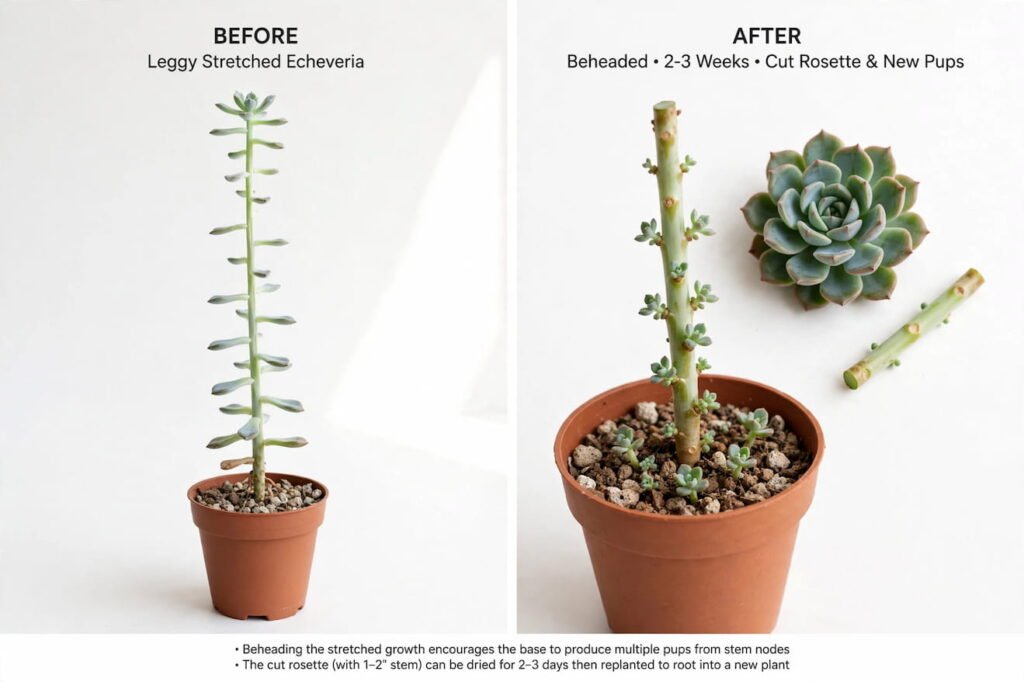
If your succulent has stretched tall and gappy from too little light, cuttings are the cure. Cut off the healthy rosette on top with an inch or two of stem — this is “beheading.” Callus and re-root it as above, and you get a compact new plant. Meanwhile, the bare base you left behind will sprout fresh pups from its nodes. One leggy plant becomes two (or more).
Fix the root cause so it doesn’t stretch again — see how much light succulents need.
How Deep, and When to Water (Settling the Confusion)
You’ll see wildly different advice on both. Here’s the resolution:
| Question | The confusion online | What actually works |
|---|---|---|
| How deep? | 'Stick it down' vs '½–2 inches' | Just deep enough to stand + cover one node — about 1 inch. Grit top-dressing does the rest. |
| Water right away? | 'Water after a day' vs 'never week one' | Don't. Plant dry, wait ~a week for roots to start, then water only when soil is fully dry. |
| Bury the leaves? | Some say press everything in | Never. Buried leaves rot. Only the bare, node-bearing stem goes under. |
How Long It Takes
| Stage | When | What you'll see |
|---|---|---|
| Callus | Days 3–5 | Dry, sealed cut end |
| First roots | Weeks 2–4 | Roots from the buried nodes; a gentle tug resists |
| New growth | Weeks 4–8 | Fresh leaves at the top; base pups on the parent |
| Established plant | 6–10 weeks | Fully anchored and growing on its own |
Cuttings are noticeably faster than leaves. Spring and summer are quickest; winter is slower without added warmth and light.
Why Cuttings Fail
- Skipping callusing — the cut rots in the soil
- Planting too deep or burying leaves that then rot
- Watering in the first week before roots form
- No node buried — nothing to root from
- Too little light — the cutting stretches or stalls
- Dirty blade — spreads disease to cutting and parent
Diagnose each failure in detail: why your propagation isn’t rooting.
Stem Cutting FAQ
Usually 2–4 weeks. A gentle tug that meets resistance means roots have anchored. New top growth follows in 4–8 weeks.
About an inch — just deep enough to stand and to bury at least one leaf node. Use grit top-dressing to keep it upright rather than planting it deeper.
Not for about a week after planting. Then water only when the soil has dried out completely. Early watering is the main cause of rot.
Yes. Callus the cut end for 3–5 days until it seals over. Planting a fresh, wet cut almost always rots.
Yes — behead the rosette and re-root it for a compact plant, while the bare base resprouts new pups. You end up with two plants and fix the stretch.
Compare Every Propagation Method
Cuttings are fastest, but leaves and offsets have their place. See how they stack up.
Part of the Succulent Care hub