
The Best Low Light Succulents (That Actually Survive)
Honest truth first: almost no succulent thrives in low light — a handful just tolerate it better than the rest. These are the toughest survivors for a dim desk, north-facing room, or office, with a pet-safe column most lists leave out.
First, a Reality Check
Low light is not no light. A room counts as “low light” only if there’s still enough to comfortably read a book. The plants below tolerate a north-facing window or a few feet from a bright one — but even these will slowly stretch in a truly dark corner. If yours starts reaching or fading, it needs more light, not a different plant.
Want a spot to actually thrive? See the full light requirements guide. Otherwise, pick from the survivors below.
The Low-Light Shortlist
Ranked from toughest to fussiest. “Pet-safe” means non-toxic to cats and dogs — a detail most guides skip.
| Succulent | Tolerates | Size | Pet-safe | Look |
|---|---|---|---|---|
| Snake Plant (Sansevieria) | Very low | Tall, upright | No | Architectural swords |
| Haworthia (Zebra Plant) | Low | Small, desk | Yes | Striped rosettes |
| Gasteria | Low | Small–medium | Yes | Thick tongue-like leaves |
| Lace Aloe (Aristaloe) | Low–moderate | Small | No | Delicate toothed edges |
| Jade Plant (Crassula) | Moderate | Bushy, tall | No | Tree-like, glossy |
| Burro's Tail (Sedum) | Moderate | Trailing | Yes | Braided hanging strands |
| Ponytail Palm (Beaucarnea) | Moderate | Tall | Yes | Fountain of thin leaves |
The top three are the genuine low-light champions. Anything marked “moderate” wants to be as close to a bright window as you can manage.
Best for a Desk or Shelf
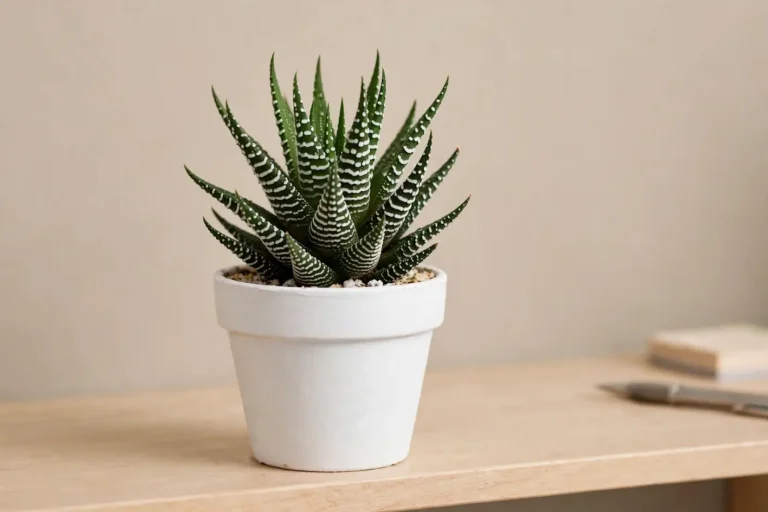
Haworthia and Gasteria are the most forgiving desk plants. Both are small, slow, pet-safe, and can go weeks without water. Haworthia’s striped rosettes stay compact even in dim light, which is exactly why it’s the default office succulent.
Best for Hanging or Trailing
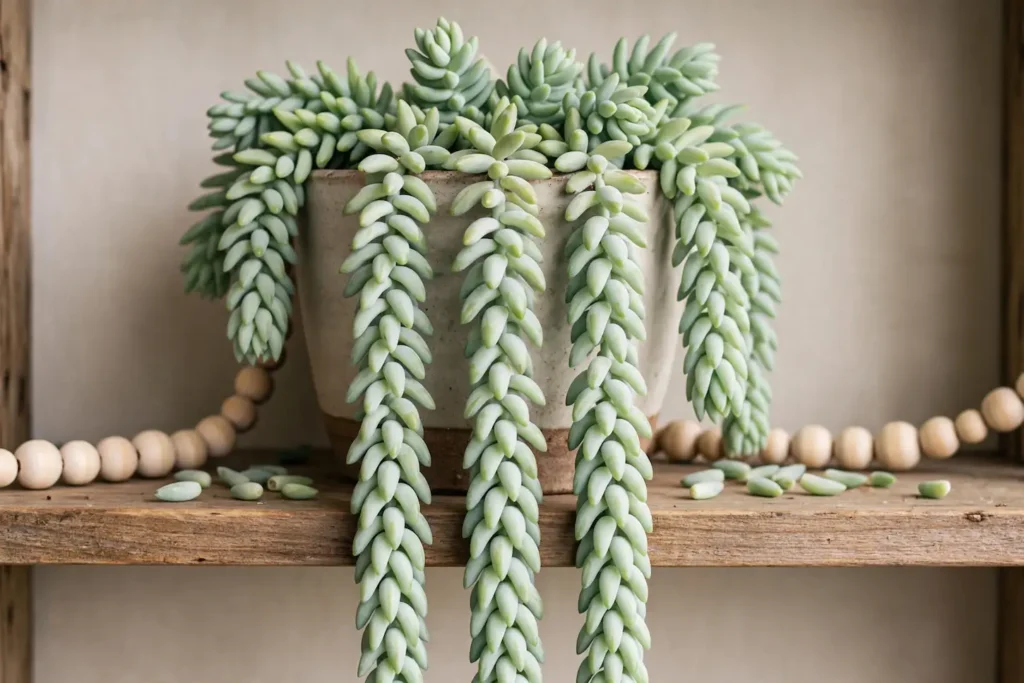
Burro’s Tail (Sedum morganianum) is the best trailing option for lower light. It handles a moderately shaded spot and its braided strands look great from a shelf — just handle it gently, as the beads drop off easily.
How to Keep Them Alive in Low Light
Low light changes the care rules. Adjust these three things:
| What | In bright light | In low light |
|---|---|---|
| Watering | Every 1–2 weeks | Much less — soil stays wet longer, so overwatering risk rises |
| Rotation | Weekly | Weekly, and turn toward the light source |
| Watch for | Sunburn | Stretching (etiolation) — the early warning sign |
The biggest killer here isn’t darkness — it’s overwatering a plant that’s barely drinking. Read the watering guide, and if a plant starts reaching, act on it (see light requirements).
Common Low-Light Mistakes
- Assuming 'low light' means a windowless room — it doesn't
- Watering on the same schedule as a bright-window plant
- Ignoring early stretching until the plant is badly leggy
- Buying a pet-toxic species (Snake Plant, Jade, Aloe) with cats or dogs around
- Choosing a 'moderate' plant for a genuinely dim corner
New to succulents entirely? Start with the Succulent Care hub.
Low Light Succulents FAQ
Some tolerate it — Snake Plant, Haworthia and Gasteria are the toughest. But none truly thrive in low light; they simply decline more slowly than sun-lovers.
Snake Plant. It handles the lowest light of any common succulent and needs very little water, making it ideal for offices with minimal natural light.
Haworthia, Gasteria, Burro’s Tail and Ponytail Palm are non-toxic to cats and dogs. Avoid Snake Plant, Jade and Aloe if pets have access.
Yes. They need enough light to read comfortably by. In a truly dark spot they’ll stretch and fade — a small grow light fixes that.
It’s still not getting enough light and is reaching for more. Move it closer to a window or add a grow light; the stretched growth won’t reverse.
Give Them the Light They Need
Even the toughest survivor does better with more light. Learn exactly how much — and how to add it.
Part of the Succulent Care hub